<?xml version="1.0" encoding="utf-8"?><feed xmlns="http://www.w3.org/2005/Atom" ><generator uri="https://jekyllrb.com/" version="3.10.0">Jekyll</generator><link href="https://petertengg.com/feed/Trading.xml" rel="self" type="application/atom+xml" /><link href="https://petertengg.com/" rel="alternate" type="text/html" /><updated>2025-12-05T06:21:44+00:00</updated><id>https://petertengg.com/feed/Trading.xml</id><title type="html">Péter Tengg | Trading</title><subtitle>A personal site by Péter Tengg — exploring creative programming, algorithmic trading, and technical projects.  Follow along for insights, experiments, and portfolio updates.</subtitle><author><name>Péter</name></author><entry><title type="html">Crypto Market Indicators - Part 6: Indicator Cheat Sheet</title><link href="https://petertengg.com/trading/2025-11-25-crypto-market-indicators-6-indicator-cheat-sheet/" rel="alternate" type="text/html" title="Crypto Market Indicators - Part 6: Indicator Cheat Sheet" /><published>2025-11-25T05:00:00+00:00</published><updated>2025-11-25T05:00:00+00:00</updated><id>https://petertengg.com/trading/crypto-market-indicators-6-indicator-cheat-sheet</id><content type="html" xml:base="https://petertengg.com/trading/2025-11-25-crypto-market-indicators-6-indicator-cheat-sheet/"><![CDATA[<p class="notice"><em>Disclaimer</em>: Nothing in this post should be taken as financial advice. Trading involves risk, and you are solely responsible for your own decisions and potential 
losses.</p>

<h2 id="1-introduction">1 Introduction</h2>

<p>This is part 6 in my <code class="language-plaintext highlighter-rouge">Crypto Market Indicators</code> series, loosely related to</p>
<ul>
  <li><a href="/trading/2025-10-14-puell-multiple">Part 1: Puell Multiple</a></li>
  <li><a href="/trading/2025-10-28-bitcoin-price-prediction">Part 2: Bitcoin Price Prediction</a></li>
</ul>

<p>Closely related to</p>
<ul>
  <li><a href="/trading/2025-11-11-crypto-market-indicators-3-dxy-and-btc-dominance">Part 3: US Dollar Index and Bitcoin Dominance</a></li>
  <li><a href="/trading/2025-11-18-crypto-market-indicators-4-pi-cycle-top-and-mvrv-z-score">Part 4: Pi Cycle Top and MVRV Z-score</a></li>
  <li><a href="/trading/2025-11-20-crypto-market-indicators-5-the-versatile-technical-indicators">Part 5: The Versatile Technical Indicators!</a></li>
</ul>

<h2 id="2-indicators">2 Indicators</h2>

<p>This post summarises each indicator discussed in <a href="/trading/2025-11-11-crypto-market-indicators-3-dxy-and-btc-dominance">Part 3</a>, <a href="/trading/2025-11-18-crypto-market-indicators-4-pi-cycle-top-and-mvrv-z-score">Part 4</a> and  <a href="/trading/2025-11-20-crypto-market-indicators-5-the-versatile-technical-indicators">Part 5</a> concisely. You can use it as a quick reference to look up <code class="language-plaintext highlighter-rouge">what the indicator does</code>, <code class="language-plaintext highlighter-rouge">how to use it</code> and <code class="language-plaintext highlighter-rouge">what signals to look for</code>.</p>

<h2 id="3-the-cheat-sheet">3 The cheat sheet</h2>

<p>Without further ado, here it is. I hope it will be useful for you!</p>

<h3 id="31-us-dollar-index-dxy">3.1 US Dollar Index (DXY)</h3>
<ul>
  <li>US Dollar Index: USD’s strength against other major currencies</li>
  <li>When DXY goes up, everything else goes down</li>
  <li>When DXY goes down, everything else goes up</li>
</ul>

<p>Medium term downtrend:</p>
<ol>
  <li><em>First leg down</em>: crypto rally led by BTC</li>
  <li><em>DXY chops for a while</em>: crypto consolidates</li>
  <li><em>Second leg down</em>: altcoin season - watch for this in 2025 Q4</li>
</ol>

<ul>
  <li>More details <a href="/trading/2025-11-11-crypto-market-indicators-3-dxy-and-btc-dominance#211-us-dollar-index-dxy-dixie">here</a></li>
</ul>

<h3 id="32-bitcoin-dominance-btcd">3.2 Bitcoin dominance (BTC.D)</h3>
<ul>
  <li>The ratio between <code class="language-plaintext highlighter-rouge">BTC's market cap</code> and the <code class="language-plaintext highlighter-rouge">total crypto market cap</code> expressed as a percentage.</li>
  <li>When BTC.D is rising, the market favours BTC</li>
  <li>
    <p>When falling, the market prefers altcoins or stable coins</p>
  </li>
  <li>Every altseason has been preceded by a significant drop in BTC.D. Levels to watch (based on history):
    <ol>
      <li><em>Mid 50s</em>: altcoins start to wake up</li>
      <li><em>Around 40</em>: altcoins skyrocket</li>
    </ol>
  </li>
  <li>More details <a href="/trading/2025-11-11-crypto-market-indicators-3-dxy-and-btc-dominance#221-btc-dominance">here</a></li>
</ul>

<h3 id="33-total">3.3 TOTAL</h3>

<ul>
  <li>Total market cap of the <code class="language-plaintext highlighter-rouge">top 125 cryptos</code>.</li>
  <li>More details <a href="/trading/2025-11-11-crypto-market-indicators-3-dxy-and-btc-dominance#22141-total">here</a></li>
</ul>

<h3 id="34-total2">3.4 TOTAL2</h3>

<ul>
  <li>Removes BTC from <a href="#33-total">TOTAL</a>: total crypto market cap without BTC.</li>
  <li>More details <a href="/trading/2025-11-11-crypto-market-indicators-3-dxy-and-btc-dominance#22142-total2">here</a></li>
</ul>

<h3 id="35-total2es">3.5 TOTAL2ES</h3>

<ul>
  <li>Removes stablecoins from <a href="#34-total2">TOTAL2</a>. (ES = Excluding Stablecoin)</li>
  <li>Removes BTC and stablecoins from <a href="#33-total">TOTAL</a></li>
  <li>More details <a href="/trading/2025-11-11-crypto-market-indicators-3-dxy-and-btc-dominance#22143-total2es">here</a></li>
</ul>

<h3 id="36-others">3.6 OTHERS</h3>

<ul>
  <li>Removes top 10 and USDT, USDC from <a href="#33-total">TOTAL</a>: <code class="language-plaintext highlighter-rouge">mid and small caps</code>.</li>
  <li>More details <a href="/trading/2025-11-11-crypto-market-indicators-3-dxy-and-btc-dominance#22144-others">here</a></li>
</ul>

<h3 id="37-stablec">3.7 STABLE.C</h3>

<ul>
  <li>Total <code class="language-plaintext highlighter-rouge">Stable Coins Market Cap</code>.</li>
  <li>This is dry powder waiting to be deployed on the market -&gt; a growing stable market cap is a bullish signal</li>
  <li>More details <a href="/trading/2025-11-11-crypto-market-indicators-3-dxy-and-btc-dominance#22145-stablec">here</a></li>
</ul>

<h3 id="38-large-cap-btc-pairs">3.8 Large cap-BTC pairs</h3>

<ul>
  <li>Such as <code class="language-plaintext highlighter-rouge">ETHBTC</code>, <code class="language-plaintext highlighter-rouge">SOLBTC</code>, <code class="language-plaintext highlighter-rouge">XRPBTC</code>, <code class="language-plaintext highlighter-rouge">BNBBTC</code>. Can serve as early indicators that the alt-segment is gaining momentum.</li>
  <li>Look for bottoming signs, reversal patterns.</li>
  <li>More details <a href="/trading/2025-11-11-crypto-market-indicators-3-dxy-and-btc-dominance#22146-large-cap-btc-pairs-ethbtc-solbtc">here</a></li>
</ul>

<h3 id="39-mvrv-z-score">3.9 MVRV Z-score</h3>

<ul>
  <li>It shows how much profit/loss BTC holders are currently sitting on.</li>
  <li>Historically (2017, 2021 cycle tops):
    <ul>
      <li>A high Z-score (above 6) meant lots of unrealised profit -&gt; cycle top</li>
      <li>A low Z-score (below 0) meant holders are in deficit -&gt; bear market bottoms</li>
    </ul>
  </li>
  <li>New market conditions (2025 and after):
    <ul>
      <li>We cannot expect so extreme high values any more. ETFs, DATs buying the dips, smoothing out the Z-score.</li>
    </ul>
  </li>
</ul>

<blockquote>
  <ol>
    <li>If Z-score starts ripping higher quickly, while ETFs and DATs are not buying -&gt; probably overvalued</li>
    <li>If Z-score cools off, while the big players are buying, it means a healthy market condition. The market cools, and is digesting gains</li>
    <li>The Z-score would still be a clear bottom signal in the bear market. Demand will be close to zero.</li>
  </ol>
</blockquote>

<ul>
  <li>More details <a href="/trading/2025-11-18-crypto-market-indicators-4-pi-cycle-top-and-mvrv-z-score#22-mvrv-z-score">here</a></li>
</ul>

<h3 id="310-relative-strength-index-rsi">3.10 Relative Strength Index (RSI)</h3>

<p>On the monthly chart, RSI has been a good indicator of tops and bottoms with the following parameters:</p>
<ul>
  <li><em>Length</em>: 14</li>
  <li><em>Overvalued</em>: 80-90 range: top signal</li>
  <li><em>Undervalued</em>: 40-50 range: bottom signal</li>
  <li>More details <a href="/trading/2025-11-20-crypto-market-indicators-5-the-versatile-technical-indicators#21-relative-strength-index-rsi">here</a></li>
</ul>

<p>On the daily, for trading sideways markets:</p>
<ol>
  <li>Make sure that the market is moving sideways. You can do this by determining clear support and resistance levels.</li>
  <li>If price is near a support, and RSI cools towards the lower band (30-40 or lower) we look a <code class="language-plaintext highlighter-rouge">bounce</code> to get in</li>
  <li>If price is near resistance, and RSI goes up (60-70 or higher), we look for a <code class="language-plaintext highlighter-rouge">rejection</code> to short</li>
</ol>

<ul>
  <li>More details <a href="/trading/2025-11-20-crypto-market-indicators-5-the-versatile-technical-indicators#2321-relative-strength-index-rsi">here</a></li>
</ul>

<h3 id="311-20-period-simple-moving-average-ma">3.11 20-period Simple Moving Average (MA)</h3>

<ul>
  <li>Monthly:
    <ul>
      <li>Determines if the chart is in a bear or bull market:
        <ul>
          <li>If the chart is above its 20-month MA -&gt; bull market</li>
          <li>If the chart is below its 20-month MA -&gt; bear market</li>
        </ul>
      </li>
    </ul>
  </li>
  <li>Weekly: signals on the monthly are reliable, but come very late -&gt; use the <a href="#310-relative-strength-index-rsi">monthly RSI top signal</a> and the 20-week MA to leave the sinking ship:
    <ul>
      <li>Monthly RSI has hit the 80-90 range and</li>
      <li>Price closed below 20-week MA -&gt; the top is likely in, bear market is starting, run for the hills!</li>
    </ul>
  </li>
  <li>More details <a href="/trading/2025-11-20-crypto-market-indicators-5-the-versatile-technical-indicators#22-20-period-simple-moving-average-ma">here</a></li>
</ul>

<h3 id="312-200-day-moving-average-ma">3.12 200-day Moving Average (MA)</h3>

<ul>
  <li>Measures market momentum on the daily chart:
    <ul>
      <li>Above it: bulls are dominating</li>
      <li>Below it: bears are in control</li>
    </ul>
  </li>
  <li>Usage:
    <ol>
      <li>When the price has been under the 200-MA and then closes above it: it signals that the downtrend might be over</li>
      <li>Check the asset’s fundamentals if they support it
        <ul>
          <li>If they do, enter</li>
          <li>If not, stay away</li>
        </ul>
      </li>
    </ol>
  </li>
  <li>More details <a href="/trading/2025-11-20-crypto-market-indicators-5-the-versatile-technical-indicators#231-200-day-moving-average-ma">here</a></li>
</ul>

<h3 id="313-bollinger-bands-bb">3.13 Bollinger Bands (BB)</h3>

<ul>
  <li>The BB consist of three bands: <code class="language-plaintext highlighter-rouge">lower band</code>, <code class="language-plaintext highlighter-rouge">middle band</code> and <code class="language-plaintext highlighter-rouge">upper band</code></li>
  <li>They expand when volatility rises, and tighten when it lowers</li>
  <li>Most of the time, the price moves between the two outer bands. When it touches one of them, it often reverts towards the middle (mean reversion).</li>
  <li>
    <p>When the two outer bands are squeezing together, a breakout can be expected</p>
  </li>
  <li>More details <a href="/trading/2025-11-20-crypto-market-indicators-5-the-versatile-technical-indicators#2322-bollinger-bands-bb">here</a></li>
</ul>

<h3 id="314-pi-cycle-top">3.14 Pi Cycle Top</h3>

<ul>
  <li>Combination of two moving averages:
    <ul>
      <li><code class="language-plaintext highlighter-rouge">111 day MA</code> (fast)</li>
      <li><code class="language-plaintext highlighter-rouge">2 * (350 day MA)</code> (slow)</li>
    </ul>
  </li>
  <li>When the fast line crosses above the slow line it signals an overvalued condition -&gt; local top</li>
  <li>Combine it with other signals to determine the real top:
    <ul>
      <li>Vertical candles</li>
      <li>Euphoric sentiment</li>
    </ul>
  </li>
  <li>More details <a href="/trading/2025-11-18-crypto-market-indicators-4-pi-cycle-top-and-mvrv-z-score#21-pi-cycle-top">here</a></li>
</ul>

<h3 id="315-bollinger-bands-bb--rsi-strategy">3.15 Bollinger Bands (BB) + RSI strategy</h3>

<ul>
  <li>Combining the BB and RSI on sideways markets can be really effective:</li>
  <li>RSI heating up over 70: overbought territory + price touches the upper band -&gt; good spot to sell</li>
  <li>
    <p>RSI cooling down under 30: oversold + price touches the lower band -&gt; time to buy</p>
  </li>
  <li>More details <a href="/trading/2025-11-20-crypto-market-indicators-5-the-versatile-technical-indicators#2323-combining-the-rsi-and-bb">here</a></li>
</ul>

<h2 id="4-honorable-mentions">4 Honorable mentions</h2>

<p>I have come across these indicators during my research, and they all looked very interesting and useful. At this time I haven’t done a deep dive into them, but I encourage you to do your own research. They can be useful tools in your arsenal:</p>

<ul>
  <li>ETF flows</li>
  <li>Altcoin Season indicator</li>
  <li>Fear and greed index</li>
  <li>M2 Money Supply</li>
</ul>

<h2 id="5-conclusion">5 Conclusion</h2>

<p>In <code class="language-plaintext highlighter-rouge">Part 3 - 5</code> in this series we have discussed quite a few indicators. They all fall in either the <code class="language-plaintext highlighter-rouge">macro</code> or <code class="language-plaintext highlighter-rouge">technical</code> category. I barely scratched the surface of <code class="language-plaintext highlighter-rouge">fundamental analysis</code>, and there are other techniques too that I didn’t explore: <code class="language-plaintext highlighter-rouge">news analysis</code>, <code class="language-plaintext highlighter-rouge">sentiment analysis</code>. These can be worth watching too. However, it is important not to get overwhelmed by information. Pick a few (I would say 3-4) that you like and watch them closely. The more you try to analyse, the more time and effort it takes, and the more likely it leads to decision paralysis.</p>

<p><code class="language-plaintext highlighter-rouge">Macro</code>, <code class="language-plaintext highlighter-rouge">technical</code>, <code class="language-plaintext highlighter-rouge">fundamental</code>, <code class="language-plaintext highlighter-rouge">news</code> and <code class="language-plaintext highlighter-rouge">sentiment</code> analysis can all be considered bluntly “indicators”. It can be a wise choice to pick your indicators so that you cover more of these categories, but what’s more important is to choose the ones that resonates with you the most. I, personally, like the <code class="language-plaintext highlighter-rouge">macro</code> and <code class="language-plaintext highlighter-rouge">technical</code> ones, that is why I discussed them in this post, but there is nothing wrong with the others either.</p>

<p>No matter what indicators and signals you watch, you are unlikely to hit the exact top. The point is to increase your market awareness and chances to find good exit prices. You don’t need to be perfect.</p>

<p>That’s all I had to say this time. Now it’s your turn. Which indicators do you prefer? Do you think the top is already in? Do you think there will be an altseason?</p>

<h2 id="6-glossary">6 Glossary</h2>
<ul>
  <li>Alts: Altcoins, alternative coins, all cryptos, except for BTC</li>
  <li>BB: Bollinger Bands</li>
  <li>BTC: Bitcoin</li>
  <li>DAT: Digital Asset Treasury</li>
  <li>DXY: US Dollar Index</li>
  <li>ETF: Exchange-Traded Fund</li>
  <li>ETH: Ethereum</li>
  <li>MA: Moving Average, often Simple Moving Average (SMA)</li>
  <li>MVRV Z-score:
    <ul>
      <li>MV: Market Value (current market cap of BTC)</li>
      <li>RV: Realised Value: (the value at which BTC holders bought their BTC originally)</li>
      <li>Z-score: a standardised value calculated from MV and RV</li>
    </ul>
  </li>
  <li>RSI: Relative Strength Index</li>
  <li>SMA: Simple Moving Average</li>
</ul>

<h2 id="7-links-and-further-reading">7 Links and further reading</h2>
<ul>
  <li><a href="/trading/2025-10-14-puell-multiple">Part 1: Puell Multiple and Its Improvements</a></li>
  <li><a href="/trading/2025-10-28-bitcoin-price-prediction">Part 2: Bitcoin Price Prediction</a></li>
  <li><a href="/trading/2025-11-11-crypto-market-indicators-3-dxy-and-btc-dominance">Part 3: US Dollar Index and Bitcoin Dominance</a></li>
  <li><a href="/trading/2025-11-18-crypto-market-indicators-4-pi-cycle-top-and-mvrv-z-score">Part 4: Pi Cycle Top and MVRV Z-score</a></li>
  <li><a href="/trading/2025-11-20-crypto-market-indicators-5-the-versatile-technical-indicators">Part 5: The Versatile Technical Indicators!</a></li>
  <li><a href="https://www.investopedia.com/terms/r/rsi.asp" target="_blank" rel="nofollow noopener noreferrer">Relative Strength Index (RSI)</a></li>
  <li><a href="https://www.investopedia.com/terms/b/bollingerbands.asp" target="_blank" rel="nofollow noopener noreferrer">Bollinger Bands (BB)</a></li>
  <li><a href="https://www.investopedia.com/terms/s/stop-lossorder.asp" target="_blank" rel="nofollow noopener noreferrer">Stop Loss (SL)</a></li>
</ul>

<h2 id="8-sources">8 Sources</h2>
<ul>
  <li><a href="https://youtu.be/JUtHFSRZ9Zo?si=iP8Frp4sfdVQu1dp" target="_blank" rel="nofollow noopener noreferrer">Crypto Cycle Top Strategy (Youtube)</a></li>
  <li><a href="https://youtu.be/NWGPdeaAm4c?si=9GS77UEwNDbztsyX" target="_blank" rel="nofollow noopener noreferrer">The Crypto Bull Market is Ending! (Youtube)</a></li>
  <li><a href="https://youtu.be/I0J2kG6f9ZU?si=HhFuIOhtwF4dBSDL" target="_blank" rel="nofollow noopener noreferrer">Top Crypto Indicators That Actually Work (Youtube)</a></li>
  <li><a href="https://youtu.be/eCxEqunyDYc?si=YTC5nvxbAcw2aepY" target="_blank" rel="nofollow noopener noreferrer">Q4 Crypto Surge Incoming? (Youtube)</a></li>
  <li><a href="https://youtu.be/8t1CAq-DxY0?si=MZ8k4O2ALgH-eK6J" target="_blank" rel="nofollow noopener noreferrer">No Altcoin Season!? Crypto Bull Market OVER!? (Youtube)</a></li>
  <li><a href="https://en.wikipedia.org/wiki/U.S._Dollar_Index" target="_blank" rel="nofollow noopener noreferrer">US Dollar Index (DXY, “Dixie”)</a></li>
  <li><a href="https://www.bestbrokers.com/forex-trading/us-dollar-share-of-global-currency-reserves/" target="_blank" rel="nofollow noopener noreferrer">US Dollar Share of Global Currency Reserves</a></li>
  <li><a href="https://coinmarketcap.com/" target="_blank" rel="nofollow noopener noreferrer">Cryptos by market cap</a></li>
  <li><a href="https://www.coinglass.com/pro/i/bitcoin-mvrv-zscore" target="_blank" rel="nofollow noopener noreferrer">MVRV Z-score</a></li>
</ul>]]></content><author><name>Péter</name></author><category term="Trading" /><category term="Crypto Market Indicators" /><category term="Bitcoin" /><category term="Crypto Market" /><category term="Altcoins" /><category term="Altcoin Season" /><category term="Indicators" /><category term="Relative Strength Index" /><category term="RSI" /><category term="US Dollar Index" /><category term="DXY" /><category term="Bitcoin dominance" /><category term="BTC.D" /><category term="TOTAL" /><category term="TOTAL2" /><category term="TOTAL2ES" /><category term="OTHERS" /><category term="STABLE.C" /><category term="MVRV Z-score" /><category term="Moving Average" /><category term="MA" /><category term="SMA" /><category term="Bollinger Bands" /><category term="BB" /><summary type="html"><![CDATA[A quick summary of each indicator discussed in previous parts to provide you the most important information for practical usage]]></summary></entry><entry><title type="html">Crypto Market Indicators - Part 5: The Versatile Technical Indicators!</title><link href="https://petertengg.com/trading/2025-11-20-crypto-market-indicators-5-the-versatile-technical-indicators/" rel="alternate" type="text/html" title="Crypto Market Indicators - Part 5: The Versatile Technical Indicators!" /><published>2025-11-20T05:00:00+00:00</published><updated>2025-11-20T05:00:00+00:00</updated><id>https://petertengg.com/trading/crypto-market-indicators-5-the-versatile-technical-indicators</id><content type="html" xml:base="https://petertengg.com/trading/2025-11-20-crypto-market-indicators-5-the-versatile-technical-indicators/"><![CDATA[<p class="notice"><em>Disclaimer</em>: Nothing in this post should be taken as financial advice. Trading involves risk, and you are solely responsible for your own decisions and potential 
losses.</p>

<h2 id="1-introduction">1 Introduction</h2>

<p>This is part 5 in my <code class="language-plaintext highlighter-rouge">Crypto Market Indicators</code> series, loosely related to</p>
<ul>
  <li><a href="/trading/2025-10-14-puell-multiple">Part 1: Puell Multiple</a></li>
  <li><a href="/trading/2025-10-28-bitcoin-price-prediction">Part 2: Bitcoin Price Prediction</a></li>
</ul>

<p>Closely related to</p>
<ul>
  <li><a href="/trading/2025-11-11-crypto-market-indicators-3-dxy-and-btc-dominance">Part 3: US Dollar Index and Bitcoin Dominance</a></li>
  <li><a href="/trading/2025-11-18-crypto-market-indicators-4-pi-cycle-top-and-mvrv-z-score">Part 4: Pi Cycle Top and MVRV Z-score</a></li>
  <li><a href="/trading/2025-11-25-crypto-market-indicators-6-indicator-cheat-sheet">Part 6: Indicator Cheat Sheet</a></li>
</ul>

<p>as they are all outcomes of the same research effort.</p>

<p>In this series, I follow a top-down hierarchy to discuss indicators. While <a href="/trading/2025-11-11-crypto-market-indicators-3-dxy-and-btc-dominance">Part 3</a> discussed global macro and crypto indicators, <a href="/trading/2025-11-18-crypto-market-indicators-4-pi-cycle-top-and-mvrv-z-score">Part 4</a> focused on Bitcoin (BTC) related ones, and this one will explore <code class="language-plaintext highlighter-rouge">technical indicators</code>, which are versatile enough to be applied from very high-level charts to intra-day trading and everything in between.</p>

<h2 id="2-technical-indicators">2 Technical indicators</h2>

<p>Technical indicators are not specific to any market or chart. They are generic tools that can be applied to different charts to help you interpret them. They also have parameters that you can change to tailor them for your needs. They work because their values are derived from the underlying market mechanics, which in turn are driven by trading psychology (you can read more about this in my <a href="/trading/2025-09-28-smart-money-concepts-1-fair-value-gaps#relationship-to-indicators">Smart Money Concepts post</a>). There is also a self fulfilling prophecy aspect to them. This is especially true if you use the most common settings, which are watched by everyone. Therefore, in my opinion, when it comes to technical indicators, the simpler and more obvious they are, the better.</p>

<h3 id="21-relative-strength-index-rsi">2.1 Relative Strength Index (RSI)</h3>

<p>The RSI is a simple momentum gauge whose values fall between <code class="language-plaintext highlighter-rouge">0</code> and <code class="language-plaintext highlighter-rouge">100</code>. It shines in sideways markets. The most common parameter settings are a <code class="language-plaintext highlighter-rouge">length</code> of <code class="language-plaintext highlighter-rouge">14</code> with an <code class="language-plaintext highlighter-rouge">undervalued threshold</code> of <code class="language-plaintext highlighter-rouge">30</code> and an <code class="language-plaintext highlighter-rouge">overvalued threshold</code> of <code class="language-plaintext highlighter-rouge">70</code>. You can visit <a href="https://www.investopedia.com/terms/r/rsi.asp" target="_blank" rel="nofollow noopener noreferrer">Investopedia</a> for further reading.</p>

<h4 id="211-on-the-monthly">2.1.1 On the monthly</h4>

<p>On the monthly chart, RSI has been a good indicator of tops and bottoms (see <a href="#fig-1">Figure 1</a> and <a href="#fig-2">Figure 2</a>) with the following parameters:</p>
<ul>
  <li><em>Length</em>: 14</li>
  <li><em>Overvalued</em>: 80-90 range: top signal</li>
  <li><em>Undervalued</em>: 40-50 range: bottom signal</li>
</ul>

<p><a id="fig-1"></a></p>

<p><a href="/assets/images/trading/crypto-market-indicators-5/fig-1.png" target="_blank" rel="noopener noreferrer">
  <img src="/assets/images/trading/crypto-market-indicators-5/fig-1.png" alt="Figure 1: BTC monthly with RSI top and bottom signals" style="max-width:100%; height:auto;" />
</a></p>

<p class="text-center"><em>Figure 1: BTC monthly with RSI top and bottom signals</em></p>

<p><a id="fig-2"></a></p>

<p><a href="/assets/images/trading/crypto-market-indicators-5/fig-2.png" target="_blank" rel="noopener noreferrer">
  <img src="/assets/images/trading/crypto-market-indicators-5/fig-2.png" alt="Figure 2: Ethereum (ETH) monthly with RSI top and bottom signals" style="max-width:100%; height:auto;" />
</a></p>

<p class="text-center"><em>Figure 2: Ethereum (ETH) monthly with RSI top and bottom signals</em></p>

<p>In the pictures above, I set the RSI <code class="language-plaintext highlighter-rouge">upper band</code> to <code class="language-plaintext highlighter-rouge">90</code>, and the <code class="language-plaintext highlighter-rouge">lower band</code> to <code class="language-plaintext highlighter-rouge">50</code>. As you can see, these settings produced pretty good quality signals, with the only caveat on <a href="#fig-2">ETH’s chart</a> marked with a yellow circle, which was the real top, but didn’t reach <code class="language-plaintext highlighter-rouge">90</code> on the RSI. However, it was within the 80-90 range I mentioned above.</p>

<h3 id="22-20-period-simple-moving-average-ma">2.2 20-period Simple Moving Average (MA)</h3>

<p class="notice">Note: The guys at <code class="language-plaintext highlighter-rouge">Coin Bureau</code>, whose videos were my main source for this article, use the <code class="language-plaintext highlighter-rouge">Bollinger Bands (BB) Moving Average</code> for this purpose, but it really is just a <code class="language-plaintext highlighter-rouge">20-period Simple Moving Average (MA)</code>, so I use the latter instead to keep the charts cleaner.</p>

<p class="notice">Note 2: Some people (including me) like to use <code class="language-plaintext highlighter-rouge">period 21</code> instead of <code class="language-plaintext highlighter-rouge">20</code> for their moving averages because <code class="language-plaintext highlighter-rouge">21</code> is a Fibonacci number. However, the difference between the two is not significant. In this article I will stick to <code class="language-plaintext highlighter-rouge">period 20</code> moving averages.</p>

<h4 id="221-on-the-monthly">2.2.1 On the monthly</h4>

<p>The <code class="language-plaintext highlighter-rouge">20-month MA</code> can help you decide if the given chart is in a bull or bear market. It can be applied to different charts, see below:</p>

<p><a id="fig-3"></a></p>

<p><a href="/assets/images/trading/crypto-market-indicators-5/fig-3.png" target="_blank" rel="noopener noreferrer">
  <img src="/assets/images/trading/crypto-market-indicators-5/fig-3.png" alt="Figure 3: BTC and 20-MA, monthly" style="max-width:100%; height:auto;" />
</a></p>

<p class="text-center"><em>Figure 3: BTC and 20-MA, monthly</em></p>

<p><a id="fig-4"></a></p>

<p><a href="/assets/images/trading/crypto-market-indicators-5/fig-4.png" target="_blank" rel="noopener noreferrer">
  <img src="/assets/images/trading/crypto-market-indicators-5/fig-4.png" alt="Figure 4: TOTAL and 20-MA, monthly" style="max-width:100%; height:auto;" />
</a></p>

<p class="text-center"><em>Figure 4: TOTAL and 20-MA, monthly</em></p>

<p><a id="fig-5"></a></p>

<p><a href="/assets/images/trading/crypto-market-indicators-5/fig-5.png" target="_blank" rel="noopener noreferrer">
  <img src="/assets/images/trading/crypto-market-indicators-5/fig-5.png" alt="Figure 5: OTHERS and 20-MA, monthly" style="max-width:100%; height:auto;" />
</a></p>

<p class="text-center"><em>Figure 5: OTHERS and 20-MA, monthly</em></p>

<p>When the chart is above its 20-month MA, it is in bull market territory, when it is below it, it is in bear market territory. As you can see, <a href="#fig-3">BTC (Figure 3)</a> and <a href="#fig-4">TOTAL (Figure 4)</a> (which are strongly correlated charts) are well above their MAs. For example, BTC is at <code class="language-plaintext highlighter-rouge">101,877</code>, while its MA is at <code class="language-plaintext highlighter-rouge">88,159</code>. This means, that a pullback to around <code class="language-plaintext highlighter-rouge">88k</code> by BTC would still be technically in a bull market.</p>

<p>On the <em>other</em> hand (pun intended), <a href="#fig-5">OTHERS (Figure 5)</a> at <code class="language-plaintext highlighter-rouge">245 B USD</code>, is struggling with its MA at <code class="language-plaintext highlighter-rouge">258.64 B USD</code>. It is technically in bear market territory, which is not good news for alts. It has seen massive wicks under the MA, and in November it is still under it, however, in my opinion, it doesn’t look hopeless.</p>

<h4 id="222-on-the-weekly">2.2.2 On the weekly</h4>

<p>Although the <code class="language-plaintext highlighter-rouge">20-month MA</code> is a reliable way to tell if your crypto is in a bull or bear market, it comes with the cost of significant latency. MAs are already lagging indicators, let alone on the monthly chart, which means that by the time your crypto closes below its 20-month MA, it has already dropped significantly. We can improve this by using the <code class="language-plaintext highlighter-rouge">20 MA on the weekly</code> chart and combining it with the aforementioned <a href="#21-relative-strength-index-rsi">RSI</a>:</p>
<ul>
  <li>If the RSI on the monthly has hit the 80-90 overbought territory, and</li>
  <li>A key level breaks on the weekly chart, such as the 20 MA, the top is likely in, the bear market is about to start.</li>
</ul>

<p><strong>Question</strong>: Why don’t we simply sell, when RSI hits the 80-90 level on the monthly?</p>

<p><strong>Answer</strong>: because the RSI can stay in the overbought territory for quite a while. If you sell as soon as it signals overbought, it may be too early, and the price may keep climbing up. Possible solutions to mitigate this problem:</p>
<ol>
  <li><code class="language-plaintext highlighter-rouge">Dollar Cost Average (DCA)</code> out: don’t close the whole position at once, but take profits gradually. It is almost always a good idea</li>
  <li>Sell, when the RSI pulls back to neutral territory: again, this could be a bit late, if you look only at the monthly chart</li>
  <li>Check signals on the lower timeframe, like the <code class="language-plaintext highlighter-rouge">20-week MA</code>, as we are discussing here</li>
</ol>

<p>Let’s take a look at BTC’s 2021 peak marked with a red circle in <a href="#fig-6">Figure 6</a>. It is the last time when RSI went above 90, the first peak of the 2021 double top. Had you waited until the monthly close below the 20-month MA, you would have sold at <code class="language-plaintext highlighter-rouge">37,648 USD</code> (see price label), 13 months later!</p>

<p><a id="fig-6"></a></p>

<p><a href="/assets/images/trading/crypto-market-indicators-5/fig-6.png" target="_blank" rel="noopener noreferrer">
  <img src="/assets/images/trading/crypto-market-indicators-5/fig-6.png" alt="Figure 6: BTC exit based on 20-month MA" style="max-width:100%; height:auto;" />
</a></p>

<p class="text-center"><em>Figure 6: BTC exit based on 20-month MA</em></p>

<p>However, if you had exited based on the 20-week MA seen in <a href="#fig-7">Figure 7</a>, you would have sold at <code class="language-plaintext highlighter-rouge">46,456 USD</code> 6 weeks later. That’s a huge difference, both in price and time!</p>

<p><a id="fig-7"></a></p>

<p><a href="/assets/images/trading/crypto-market-indicators-5/fig-7.png" target="_blank" rel="noopener noreferrer">
  <img src="/assets/images/trading/crypto-market-indicators-5/fig-7.png" alt="Figure 7: BTC exit based on 20-week MA" style="max-width:100%; height:auto;" />
</a></p>

<p class="text-center"><em>Figure 7: BTC exit based on 20-week MA</em></p>

<h3 id="23-short-term-trading">2.3 Short-term trading</h3>

<p>So far we have discussed indicators that help you navigate the broader macro backdrop and the crypto market as a whole. These can be very helpful when making longer term investments. In this section, I will discuss how technical indicators can help you in short to mid-term trading.</p>

<h4 id="231-200-day-moving-average-ma">2.3.1 200-day Moving Average (MA)</h4>

<p>The 200-day MA is a simple, almost boring indicator, but don’t let it fool you, it works well.</p>
<ul>
  <li>It is the average price of an asset over the last 200 days plotted as a line.
    <ul>
      <li>Above it: bulls are dominating</li>
      <li>Below it: bears are in control</li>
    </ul>
  </li>
  <li>Crypto markets are driven by momentum and the MA measures it</li>
</ul>

<h5 id="2311-how-to-use-it">2.3.1.1 How to use it?</h5>

<ol>
  <li>Keep an eye on the project(s) that you are interested in. It is advisable that it has:
    <ul>
      <li>A strong team shipping real products</li>
      <li>A large community</li>
      <li>A strong narrative that is easy to understand</li>
    </ul>
  </li>
  <li>If a coin has been under its 200-MA for a while, and closes a full day above it, it can be a potential buying opportunity, but it needs confirmation:
    <ul>
      <li>If the next couple of days stay above the MA and trend up, that’s a strong indicator of bullish momentum</li>
      <li>If the price is rejected for 2-3 consecutive days, the momentum is not there yet -&gt; stay away</li>
    </ul>
  </li>
  <li>A close above the 200-MA has to be examined in context. It needs a real fundamental catalyst, for example:
    <ul>
      <li>A new token launch</li>
      <li>Tokenomics revamp</li>
      <li>Surge in user growth</li>
      <li>Stable coin growth: important indicator! More stable coins: more buying power. Can support the momentum</li>
    </ul>
  </li>
  <li>When to ignore the close above 200-MA?
    <ul>
      <li>When fundamentals don’t match up with the technicals, e.g.:
        <ul>
          <li>Large multi-month supply unlock</li>
          <li>Prominent team member leaving the project</li>
          <li>Backdrop from BTC and ETH: consistent ETF outflows -&gt; not good to buy</li>
        </ul>
      </li>
    </ul>
  </li>
</ol>

<p>Put together:</p>
<ol>
  <li>The 200-MA gives the signal that the downtrend might be over</li>
  <li>Catalysts and flows tell you if it is worth stepping in</li>
</ol>

<p>-&gt; This sounds simple, but it is not easy. You need patience. Most market participants lack it.</p>

<h4 id="232-sideways-markets">2.3.2 Sideways markets</h4>

<p>In the <a href="#231-200-day-moving-average-ma">200-day MA</a> section we discussed trending markets, but sideways markets are a different beast, therefore you need a different set of tools to trade them successfully.</p>

<p>Many traders avoid them entirely because there is a high chance that you get chopped up and lose money. It is a completely valid approach. However, if you still want to trade, keep in mind:</p>
<ol>
  <li>This is a risky market environment, use small positions, while you sit on your main portfolio</li>
  <li>You will need tools suited for these conditions, so read on!</li>
</ol>

<h5 id="2321-relative-strength-index-rsi">2.3.2.1 Relative Strength Index (RSI)</h5>

<p>Again? Yes, we summon our old friend again. As we have seen <a href="#21-relative-strength-index-rsi">earlier</a>, the RSI shines in sideways markets.</p>

<p>On the daily timeframe, you can trade like this:</p>
<ol>
  <li>Make sure that the market is moving sideways. You can do this by determining clear support and resistance levels, see <a href="#fig-8">Figure 8</a></li>
  <li>If price is near a support, and RSI cools towards the lower band (30-40 or lower) we look for a <code class="language-plaintext highlighter-rouge">bounce</code> to get in</li>
  <li>If price is near resistance, and RSI goes up (60-70 or higher), we look for a <code class="language-plaintext highlighter-rouge">rejection</code> to short</li>
</ol>

<p><a id="fig-8"></a></p>

<p><a href="/assets/images/trading/crypto-market-indicators-5/fig-8.png" target="_blank" rel="noopener noreferrer">
  <img src="/assets/images/trading/crypto-market-indicators-5/fig-8.png" alt="Figure 8: BTC sideways market and RSI trading, daily" style="max-width:100%; height:auto;" />
</a></p>

<p class="text-center"><em>Figure 8: BTC sideways market and RSI trading, daily</em></p>

<p>In <a href="#fig-8">Figure 8</a> you can see some examples of this concept. Green marking long entries, red marking a short entry. You can also see the corresponding RSI value. The <code class="language-plaintext highlighter-rouge">bounce</code> or <code class="language-plaintext highlighter-rouge">rejection</code> are always a big bodied bullish/bearish candle in the chart.</p>

<p>Here, context is key: <strong>it must be a sideways market</strong>. RSI is not so useful in trending markets. It can stay overbought or oversold for a long time.</p>

<h5 id="2322-bollinger-bands-bb">2.3.2.2 Bollinger Bands (BB)</h5>

<p>Bollinger Bands (BB) are elastic guardrails around a simple MA. They expand when volatility rises, and tighten when it lowers. The most common settings:</p>
<ul>
  <li>Middle band: <code class="language-plaintext highlighter-rouge">20 MA</code> (as I mentioned <a href="#22-20-period-simple-moving-average-ma">earlier</a>)</li>
  <li>Upper and lower bands: <code class="language-plaintext highlighter-rouge">2 standard deviations</code> away from the middle band</li>
</ul>

<p>Most of the time, the price moves between the two outer bands. When it touches one of them, it often reverts towards the middle (mean reversion).</p>

<p>When the two outer bands are squeezing together, a breakout can be expected</p>

<p>You can read more about the BB on <a href="https://www.investopedia.com/terms/b/bollingerbands.asp" target="_blank" rel="nofollow noopener noreferrer">Investopedia</a>.</p>

<p>Let’s have a look at our previous example, but now utilising Bollinger Bands:</p>

<p><a id="fig-9"></a></p>

<p><a href="/assets/images/trading/crypto-market-indicators-5/fig-9.png" target="_blank" rel="noopener noreferrer">
  <img src="/assets/images/trading/crypto-market-indicators-5/fig-9.png" alt="Figure 9: BTC sideways market and BB, daily" style="max-width:100%; height:auto;" />
</a></p>

<p class="text-center"><em>Figure 9: BTC sideways market and BB, daily</em></p>

<p>In <a href="#fig-9">Figure 9</a> you can see the following cases:</p>
<ul>
  <li><code class="language-plaintext highlighter-rouge">1</code>: The BB is squeezing together, and as mentioned before, it is followed by a breakout. This time to the down-side (two large red candles)</li>
  <li><code class="language-plaintext highlighter-rouge">2</code>, <code class="language-plaintext highlighter-rouge">5</code>, <code class="language-plaintext highlighter-rouge">7</code>, <code class="language-plaintext highlighter-rouge">11</code>: pretty good long entries, 10 as well, if you manage to catch the wick</li>
  <li><code class="language-plaintext highlighter-rouge">4</code>: a potentially losing long (depending on your <a href="https://www.investopedia.com/terms/s/stop-lossorder.asp" target="_blank" rel="nofollow noopener noreferrer">Stop Loss</a> (SL))</li>
  <li><code class="language-plaintext highlighter-rouge">3</code>, <code class="language-plaintext highlighter-rouge">9</code>: pretty good short signals</li>
  <li><code class="language-plaintext highlighter-rouge">6</code>: a decent short signal, if the initial upward movement doesn’t stop you out</li>
  <li><code class="language-plaintext highlighter-rouge">8</code>: a potentially losing short (depending on your SL)</li>
</ul>

<p>As you can see, the BB seem to work pretty well, at least according to this admittedly small sample.</p>

<h5 id="2323-combining-the-rsi-and-bb">2.3.2.3 Combining the RSI and BB</h5>

<p>Combining the two previous indicators is a really powerful approach in sideways markets:</p>
<ul>
  <li>RSI heating up over 70: overbought territory + price touches the upper band -&gt; good spot to sell</li>
  <li>RSI cooling down under 30: oversold + price touches the lower band -&gt; time to buy</li>
</ul>

<p>Let’s see our example again:</p>

<p><a id="fig-10"></a></p>

<p><a href="/assets/images/trading/crypto-market-indicators-5/fig-10.png" target="_blank" rel="noopener noreferrer">
  <img src="/assets/images/trading/crypto-market-indicators-5/fig-10.png" alt="Figure 10: BTC sideways market, RSI and BB signals, daily" style="max-width:100%; height:auto;" />
</a></p>

<p class="text-center"><em>Figure 10: BTC sideways market, RSI and BB signals, daily</em></p>

<p>As you can see in <a href="#fig-10">Figure 10</a>, we got fewer, but higher quality signals:</p>
<ul>
  <li><code class="language-plaintext highlighter-rouge">1</code>, marked with yellow circle is not a valid signal, because the market is not moving sideways. It is in a strong uptrend. It ran to an All-Time High (ATH).</li>
  <li><code class="language-plaintext highlighter-rouge">2</code>, <code class="language-plaintext highlighter-rouge">4</code>: touch the <code class="language-plaintext highlighter-rouge">BB</code>, and they come close on the <code class="language-plaintext highlighter-rouge">RSI</code>, but don’t quite reach it. Regardless, <code class="language-plaintext highlighter-rouge">2</code> worked out pretty well, and whether <code class="language-plaintext highlighter-rouge">4</code> will work out or not, I don’t know at the time of writing. It will be interesting to see. (Opening on these signals would mean relaxing the rules of the strategy which may or may not be acceptable. Only backtesting could tell.)</li>
  <li><code class="language-plaintext highlighter-rouge">3</code>: the only clean signal, that fulfills all the criteria: <code class="language-plaintext highlighter-rouge">sideways market</code> + <code class="language-plaintext highlighter-rouge">touches the BB</code> + <code class="language-plaintext highlighter-rouge">RSI at least 70</code>.</li>
</ul>

<h2 id="3-conclusion">3 Conclusion</h2>

<p>In this post we have learned about some common technical indicators: <code class="language-plaintext highlighter-rouge">Moving Averages (MA)</code>, <code class="language-plaintext highlighter-rouge">Relative Strength Index (RSI)</code> and <code class="language-plaintext highlighter-rouge">Bollinger Bands</code>. We have seen how they work on long, mid and short-term timeframes as well. Their versatility and effectiveness are thanks to the fact that they all measure the market sentiment in some way, and due to their simplicity many traders watch them, strengthening their self-fulfilling property.</p>

<p>This concludes my research on crypto market indicators, but there is still one post remaining. In the <a href="/trading/2025-11-25-crypto-market-indicators-6-indicator-cheat-sheet">next post</a> I will publish a cheatsheet that summarises briefly each indicator discussed in this series. It will give you a quick overview and the most important signals they can provide, and my final thoughts about this topic. Thanks for reading, stay tuned!</p>

<h2 id="4-glossary">4 Glossary</h2>
<ul>
  <li>Alts: Altcoins, alternative coins, all cryptos, except for BTC</li>
  <li>ATH: All-Time High</li>
  <li>BB: Bollinger Bands</li>
  <li>BTC: Bitcoin</li>
  <li>DCA: Dollar Cost Average</li>
  <li>ETF: Exchange-Traded Fund</li>
  <li>ETH: Ethereum</li>
  <li>MA: Moving Average, often Simple Moving Average (SMA)</li>
  <li>RSI: Relative Strength Index</li>
  <li>SL: Stop Loss</li>
</ul>

<h2 id="5-links-and-further-reading">5 Links and further reading</h2>
<ul>
  <li><a href="/trading/2025-10-14-puell-multiple">Part 1: Puell Multiple and Its Improvements</a></li>
  <li><a href="/trading/2025-10-28-bitcoin-price-prediction">Part 2: Bitcoin Price Prediction</a></li>
  <li><a href="/trading/2025-11-11-crypto-market-indicators-3-dxy-and-btc-dominance">Part 3: US Dollar Index and Bitcoin Dominance</a></li>
  <li><a href="/trading/2025-11-18-crypto-market-indicators-4-pi-cycle-top-and-mvrv-z-score">Part 4: Pi Cycle Top and MVRV Z-score</a></li>
  <li><a href="/trading/2025-11-25-crypto-market-indicators-6-indicator-cheat-sheet">Part 6: Indicator Cheat Sheet</a></li>
  <li><a href="https://www.investopedia.com/terms/r/rsi.asp" target="_blank" rel="nofollow noopener noreferrer">Relative Strength Index (RSI)</a></li>
  <li><a href="https://www.investopedia.com/terms/b/bollingerbands.asp" target="_blank" rel="nofollow noopener noreferrer">Bollinger Bands (BB)</a></li>
  <li><a href="https://www.investopedia.com/terms/s/stop-lossorder.asp" target="_blank" rel="nofollow noopener noreferrer">Stop Loss (SL)</a></li>
</ul>

<h2 id="6-sources">6 Sources</h2>
<ul>
  <li><a href="https://youtu.be/NWGPdeaAm4c?si=9GS77UEwNDbztsyX" target="_blank" rel="nofollow noopener noreferrer">The Crypto Bull Market is Ending! (Youtube)</a></li>
  <li><a href="https://youtu.be/I0J2kG6f9ZU?si=HhFuIOhtwF4dBSDL" target="_blank" rel="nofollow noopener noreferrer">Top Crypto Indicators That Actually Work (Youtube)</a></li>
</ul>]]></content><author><name>Péter</name></author><category term="Trading" /><category term="Crypto Market Indicators" /><category term="Bitcoin" /><category term="Crypto Market" /><category term="Altcoins" /><category term="Altcoin Season" /><category term="Indicators" /><category term="Relative Strength Index" /><category term="RSI" /><category term="Bollinger Bands" /><category term="BB" /><summary type="html"><![CDATA[Technical indicators can be applied from very high-level charts to intra-day trading and everything in between]]></summary></entry><entry><title type="html">Crypto Market Indicators - Part 4: Pi Cycle Top and MVRV Z-score</title><link href="https://petertengg.com/trading/2025-11-18-crypto-market-indicators-4-pi-cycle-top-and-mvrv-z-score/" rel="alternate" type="text/html" title="Crypto Market Indicators - Part 4: Pi Cycle Top and MVRV Z-score" /><published>2025-11-18T05:00:00+00:00</published><updated>2025-11-18T05:00:00+00:00</updated><id>https://petertengg.com/trading/crypto-market-indicators-4-pi-cycle-top-and-mvrv-z-score</id><content type="html" xml:base="https://petertengg.com/trading/2025-11-18-crypto-market-indicators-4-pi-cycle-top-and-mvrv-z-score/"><![CDATA[<p class="notice"><em>Disclaimer</em>: Nothing in this post should be taken as financial advice. Trading involves risk, and you are solely responsible for your own decisions and potential 
losses.</p>

<h2 id="1-introduction">1 Introduction</h2>

<p>This is part 4 in my <code class="language-plaintext highlighter-rouge">Crypto Market Indicators</code> series, loosely related to</p>
<ul>
  <li><a href="/trading/2025-10-14-puell-multiple">Part 1: Puell Multiple</a></li>
  <li><a href="/trading/2025-10-28-bitcoin-price-prediction">Part 2: Bitcoin Price Prediction</a></li>
</ul>

<p>Closely related to</p>
<ul>
  <li><a href="/trading/2025-11-11-crypto-market-indicators-3-dxy-and-btc-dominance">Part 3: US Dollar Index and Bitcoin Dominance</a></li>
  <li><a href="/trading/2025-11-20-crypto-market-indicators-5-the-versatile-technical-indicators">Part 5: The Versatile Technical Indicators!</a></li>
  <li><a href="/trading/2025-11-25-crypto-market-indicators-6-indicator-cheat-sheet">Part 6: Indicator Cheat Sheet</a></li>
</ul>

<p>as they are all outcomes of the same research effort.</p>

<h2 id="2-indicators">2 Indicators</h2>

<p>This section picks up where <a href="/trading/2025-11-11-crypto-market-indicators-3-dxy-and-btc-dominance#2-indicators">Part 3 Indicators</a> section left off and goes one level deeper in the rabbit hole: <a href="/trading/2025-11-11-crypto-market-indicators-3-dxy-and-btc-dominance">Part 3</a> discussed macro and global crypto indicators, while this part zooms in on Bitcoin itself. The indicators introduced here will still carry valuable information about the crypto sector as a whole, since Bitcoin is so dominant in the market.</p>

<h3 id="21-pi-cycle-top">2.1 Pi Cycle Top</h3>

<p>The Pi cycle top is a combination of two daily moving averages (MA):</p>
<ul>
  <li><code class="language-plaintext highlighter-rouge">111 day MA</code> (fast): Represents short-term market momentum. How fast Bitcoin’s price is rising in recent months.</li>
  <li><code class="language-plaintext highlighter-rouge">2 * (350 day MA)</code> (slow): Represents a longer-term trend line, multiplied by two</li>
</ul>

<p>It is called <code class="language-plaintext highlighter-rouge">Pi</code> because <code class="language-plaintext highlighter-rouge">350 / 111 = 3.153</code>, which is close to the mathematical constant, <code class="language-plaintext highlighter-rouge">Pi (3.1415)</code>.</p>

<ul>
  <li>The fast line (orange in <a href="#fig-1">Figure 1</a>) crossing above (marked by dashed lines) the slow line (green) has historically signaled cycle tops with surprising accuracy.</li>
  <li>We can also say that after a top signal, when the fast line returned below the slow one, BTC had already begun trending down (bear market).</li>
</ul>

<p><a id="fig-1"></a></p>

<p><a href="/assets/images/trading/crypto-market-indicators-4/fig-1.png" target="_blank" rel="noopener noreferrer">
  <img src="/assets/images/trading/crypto-market-indicators-4/fig-1.png" alt="Figure 1: Pi top signals in the past" style="max-width:100%; height:auto;" />
</a></p>

<p class="text-center"><em>Figure 1: Pi top signals in the past</em></p>

<p>As you can see, it also produced a signal on 7th April 2013, which was a local top, not a cycle top. This means two things:</p>
<ol>
  <li>What the indicator really does is signal overvalued, bubbly market conditions, it doesn’t care about market cycles or cycle tops really.</li>
  <li>Combine it with other signals to determine the real top:
    <ul>
      <li>Vertical candles</li>
      <li>Euphoric sentiment</li>
    </ul>

    <p>-&gt; These combined can indicate quite well that it is time to sell. The Pi Cycle Top indicator can signal a bit early, but starting to scale out won’t hurt.</p>
  </li>
</ol>

<h4 id="211-caveats">2.1.1 Caveats</h4>
<ul>
  <li>Can signal a bit too early</li>
  <li>It can happen that it won’t signal at all if there isn’t an explosive spike in price. This is a real possibility in 2025 and later, since the market has changed with all the institutions and treasury companies entering. Bitcoin has been in a long gradual uptrend since November 2022, and as you can see in <a href="#fig-2">Figure 2</a>, the fast MA doesn’t seem to be able to catch up with the green line (green box area).</li>
</ul>

<p><a id="fig-2"></a></p>

<p><a href="/assets/images/trading/crypto-market-indicators-4/fig-2.png" target="_blank" rel="noopener noreferrer">
  <img src="/assets/images/trading/crypto-market-indicators-4/fig-2.png" alt="Figure 2: Long, gradual uptrend" style="max-width:100%; height:auto;" />
</a></p>

<p class="text-center"><em>Figure 2: Long, gradual uptrend</em></p>

<h3 id="22-mvrv-z-score">2.2 MVRV Z-Score</h3>

<p>It shows how much profit/loss BTC holders are currently sitting on.</p>
<ul>
  <li>If they are sitting on a lot of profit, the market is likely overvalued. If they are sitting on a lot of loss, it is likely undervalued.</li>
  <li>Historically, it has been very good at pointing out market tops and bottoms.</li>
</ul>

<p class="notice">Fun fact: David Puell, author of the <a href="/trading/2025-10-14-puell-multiple">Puell Multiple</a> is also the co-author of MVRV Z-score.</p>

<h4 id="221-what-does-this-complicated-name-mean">2.2.1 What does this complicated name mean?</h4>

<p>It is not as complicated as it sounds. Let’s break it down, so you can remember it more easily. MVRV Z-score consists of two components (<code class="language-plaintext highlighter-rouge">MV</code> and <code class="language-plaintext highlighter-rouge">RV</code>), and a metric (<code class="language-plaintext highlighter-rouge">Z-score</code>) derived from them:</p>
<ul>
  <li><em>MV</em>: Market Value (current market capitalisation (market cap) of BTC)</li>
  <li><em>RV</em>: Realised Value: (the value at which BTC holders bought their BTC originally)</li>
  <li><em>Z-score</em>: a standardised value calculated from MV and RV</li>
</ul>

<p>You can read more about it on <a href="https://www.coinglass.com/pro/i/bitcoin-mvrv-zscore" target="_blank" rel="nofollow noopener noreferrer">Coinglass</a>.</p>

<p>I will use <code class="language-plaintext highlighter-rouge">MVRV Z-score</code> and <code class="language-plaintext highlighter-rouge">Z-score</code> interchangeably from now on to type less.</p>

<h5 id="2211-how-to-use-it">2.2.1.1 How to use it?</h5>

<p>It works best on higher timeframes, such as the weekly or monthly, as it gives cleaner signals.</p>

<p>Historically:</p>
<ul>
  <li>A high Z-score (above 6, <a href="#fig-3">Figure 3</a>) indicated lots of unrealised profit, indicating overvalued market, usually lining up with tops (red circles)</li>
  <li>A low Z-score (below 0) meant holders are in deficit, lining up with bear market bottoms (green circles)</li>
</ul>

<p><a id="fig-3"></a></p>

<p><a href="/assets/images/trading/crypto-market-indicators-4/fig-3.png" target="_blank" rel="noopener noreferrer">
  <img src="/assets/images/trading/crypto-market-indicators-4/fig-3.png" alt="Figure 3: MRVR Z-score on the weekly" style="max-width:100%; height:auto;" />
</a></p>

<p class="text-center"><em>Figure 3: MRVR Z-score on the weekly</em></p>

<p>That was in the past, at least. Now the story looks a bit different:</p>
<ul>
  <li>Despite BTC having gone up significantly in the past year, the Z-score still stays in the middle range, not touching overvalued territory. This means that coins are sold and repriced continuously, instead of the big retail meltup we saw in the previous cycles.</li>
  <li>Big buyers, like ETFs and treasury companies (Digital Asset Treasury, DAT) keep buying the dips and higher prices as well, smoothing out the Z-score, so we cannot expect such extreme value spikes as those around the 2017 or 2021 tops</li>
</ul>

<p>However, this doesn’t mean that the Z-Score has become obsolete, we just need to interpret it differently:</p>
<ul>
  <li>If Z-score starts ripping higher quickly, while ETFs and DATs are stalling or selling, that smells like froth. It means the price is going up without the bid from the big players</li>
  <li>If Z-score cools off, while the big players are buying, it means a healthy market conditions. The market cools, and is digesting gains</li>
  <li>The Z-score would still be a clear bottom signal in the bear market. This is because the bear market would put pressure on smaller holders, trigger liquidations, and this will cascade to bigger players as well. Demand will be close to zero.</li>
</ul>

<h5 id="2212-caveats">2.2.1.2 Caveats</h5>
<ul>
  <li>Can signal too early</li>
  <li>Can move sideways in the mid-range if the market has intense flows</li>
</ul>

<h2 id="3-conclusion">3 Conclusion</h2>

<p>In this post I have discussed two Bitcoin specific indicators, <code class="language-plaintext highlighter-rouge">Pi Cycle Top</code> and <code class="language-plaintext highlighter-rouge">MVRV Z-score</code>. They have a good track record of signaling Bitcoin cycle tops. It is important because BTC leads the crypto market, and around the time it tops, alts have their big rally too. However, the market is maturing, which means that we will need a bit different approach when utilising them. We cannot expect the market to become so overheated anymore, and we have to interpret these signals more in context.</p>

<p>In <a href="/trading/2025-11-20-crypto-market-indicators-5-the-versatile-technical-indicators">Part 5</a>, we will go one more level lower in the indicator hierarchy, and have a look at technical indicators. They are versatile and powerful tools that can be combined with each other and other indicators as well. Personally, I am a big fan of them. :) See you there!</p>

<h2 id="4-glossary">4 Glossary</h2>
<ul>
  <li>BTC: Bitcoin</li>
  <li>DAT: Digital Asset Treasury</li>
  <li>ETF: Exchange-Traded Fund</li>
  <li>MA: Moving Average, often Simple Moving Average (SMA)</li>
  <li>MVRV Z-score:
    <ul>
      <li>MV: Market Value (current market cap of BTC)</li>
      <li>RV: Realised Value: (the value at which BTC holders bought their BTC originally)</li>
      <li>Z-score: a standardised value calculated from MV and RV</li>
    </ul>
  </li>
</ul>

<h2 id="5-links-and-further-reading">5 Links and further reading</h2>
<ul>
  <li><a href="/trading/2025-10-14-puell-multiple">Part 1: Puell Multiple and Its Improvements</a></li>
  <li><a href="/trading/2025-10-28-bitcoin-price-prediction">Part 2: Bitcoin Price Prediction</a></li>
  <li><a href="/trading/2025-11-11-crypto-market-indicators-3-dxy-and-btc-dominance">Part 3: US Dollar Index and Bitcoin Dominance</a></li>
  <li><a href="/trading/2025-11-20-crypto-market-indicators-5-the-versatile-technical-indicators">Part 5: The Versatile Technical Indicators!</a></li>
  <li><a href="/trading/2025-11-25-crypto-market-indicators-6-indicator-cheat-sheet">Part 6: Indicator Cheat Sheet</a></li>
</ul>

<h2 id="6-sources">6 Sources</h2>
<ul>
  <li><a href="https://youtu.be/I0J2kG6f9ZU?si=HhFuIOhtwF4dBSDL" target="_blank" rel="nofollow noopener noreferrer">Top Crypto Indicators That Actually Work (Youtube)</a></li>
  <li><a href="https://www.coinglass.com/pro/i/bitcoin-mvrv-zscore" target="_blank" rel="nofollow noopener noreferrer">MVRV Z-score</a></li>
</ul>]]></content><author><name>Péter</name></author><category term="Trading" /><category term="Crypto Market Indicators" /><category term="Bitcoin" /><category term="Crypto Market" /><category term="Pi Cycle Top" /><category term="MVRV Z-score" /><category term="Indicators" /><summary type="html"><![CDATA[Two indicators historically successful to signal Bitcoin's cycle tops]]></summary></entry><entry><title type="html">Crypto Market Indicators - Part 3: US Dollar Index and Bitcoin Dominance</title><link href="https://petertengg.com/trading/2025-11-11-crypto-market-indicators-3-dxy-and-btc-dominance/" rel="alternate" type="text/html" title="Crypto Market Indicators - Part 3: US Dollar Index and Bitcoin Dominance" /><published>2025-11-11T06:00:00+00:00</published><updated>2025-11-11T06:00:00+00:00</updated><id>https://petertengg.com/trading/crypto-market-indicators-3-dxy-and-btc-dominance</id><content type="html" xml:base="https://petertengg.com/trading/2025-11-11-crypto-market-indicators-3-dxy-and-btc-dominance/"><![CDATA[<p class="notice"><em>Disclaimer</em>: Nothing in this post should be taken as financial advice. Trading involves risk, and you are solely responsible for your own decisions and potential 
losses.</p>

<h2 id="1-introduction">1 Introduction</h2>

<p>Many believe that the <code class="language-plaintext highlighter-rouge">crypto market cycle top</code> is about to happen in late 2025 or early 2026. Perhaps there are even more who are wondering:</p>
<ul>
  <li>Is it going to be different this time?</li>
  <li>Is the top already in, or is it still ahead of us?</li>
  <li>Will there be an altseason at all?</li>
</ul>

<p>While these questions can only be answered with certainty in hindsight, there are indicators that can help you navigate this upcoming period. In the upcoming posts, I am going to discuss some of the most notable ones.</p>

<p>This is part 3 in my <code class="language-plaintext highlighter-rouge">Crypto Market Indicators</code> series. It is loosely related to <a href="/trading/2025-10-14-puell-multiple">Part 1: Puell Multiple</a> and <a href="/trading/2025-10-28-bitcoin-price-prediction">Part 2: Bitcoin Price Prediction</a>, but is closely related to the upcoming <a href="#5-links-and-further-reading">parts 4-6</a>, which are all products of the same research project.</p>

<h2 id="2-indicators">2 Indicators</h2>

<p>Two things are clear:</p>
<ol>
  <li>Crypto is an asset class that is part of the global market, and thus affected by macro factors</li>
  <li>The crypto market is always led by Bitcoin (BTC), the rest of the cryptos (altcoins, alts) follow it</li>
</ol>

<p>From this, we can say (a bit simplified) that the chain of effect is as follows: <code class="language-plaintext highlighter-rouge">Global Market -&gt; BTC -&gt; altcoins</code>.</p>

<p>In this series of posts, I will follow this top-down logic to discuss the indicators worth watching.</p>

<h3 id="21-macro-indicators">2.1 Macro Indicators</h3>

<p>As discussed earlier, I will follow a top-down logic while going over the indicators. The first category in the hierarchy is the <code class="language-plaintext highlighter-rouge">macro indicators</code> that give us valuable insight into the world’s global economy. Even if you are only interested in your small-cap altcoin, this is a level you want to keep an eye on to get an idea of the general market condition.</p>

<h4 id="211-us-dollar-index-dxy-dixie">2.1.1 US Dollar Index (DXY, “Dixie”)</h4>

<p>The USD (though declining lately) has been the most dominant currency in world economics. The greatest part (<a href="https://www.bestbrokers.com/forex-trading/us-dollar-share-of-global-currency-reserves/" target="_blank" rel="nofollow noopener noreferrer">54%</a>) of global trade is still settled in USD, and therefore its strength or weakness has a great impact on the global economy. The Dollar’s strength is expressed by the <code class="language-plaintext highlighter-rouge">US Dollar Index (DXY)</code> which compares it to a basket of other major <a href="https://en.wikipedia.org/wiki/U.S._Dollar_Index" target="_blank" rel="nofollow noopener noreferrer">currencies</a>:</p>
<ul>
  <li>Euro (EUR), 57.6% weight</li>
  <li>Japanese yen (JPY), 13.6% weight</li>
  <li>Pound sterling (GBP), 11.9% weight</li>
  <li>Canadian dollar (CAD), 9.1% weight</li>
  <li>Swedish krona (SEK), 4.2% weight</li>
  <li>Swiss franc (CHF), 3.6% weight</li>
</ul>

<p>As you can see, the <code class="language-plaintext highlighter-rouge">Euro (EUR)</code> and the <code class="language-plaintext highlighter-rouge">Japanese Yen (JPY)</code> have the greatest influence in the equation, therefore changes in their strength can have an impact on the DXY.</p>

<p>The DXY tells you how much liquidity there is in the global economy.</p>
<ul>
  <li>Strong DXY means less liquidity</li>
  <li>Weak DXY means more liquidity</li>
</ul>

<blockquote>
  <p>If the DXY goes up (USD is getting stronger), it drains liquidity from the markets and everything tends to go down, and vice versa.</p>
</blockquote>

<h5 id="2111-dxy-and-the-crypto-market">2.1.1.1 DXY and the crypto market</h5>

<p>Historically, when the DXY was in a medium term downtrend, the crypto market reacted as follows (<a href="https://youtu.be/8t1CAq-DxY0?si=MZ8k4O2ALgH-eK6J" target="_blank" rel="nofollow noopener noreferrer">source</a>):</p>
<ol>
  <li><em>First leg down</em>: crypto rally led by BTC (marked as <code class="language-plaintext highlighter-rouge">B</code> in <a href="#fig-indicators-1">Figure 1</a>)</li>
  <li><em>DXY chops for a while</em>: crypto consolidates (<code class="language-plaintext highlighter-rouge">C</code>)</li>
  <li><em>Second leg down</em>: altcoin season (<code class="language-plaintext highlighter-rouge">A</code>)</li>
</ol>

<p><a id="fig-indicators-1"></a></p>

<p><a href="/assets/images/trading/crypto-market-indicators-3/fig-1.png" target="_blank" rel="noopener noreferrer">
  <img src="/assets/images/trading/crypto-market-indicators-3/fig-1.png" alt="Figure 1: BTC price and DXY, monthly" style="max-width:100%; height:auto;" />
</a></p>

<p class="text-center"><em>Figure 1: BTC price and DXY, monthly</em></p>

<p>There is the question mark: will there be an altseason this time? The current situation is:</p>
<ol>
  <li><em>February-June 2025</em>: we had the first big drop in DXY, BTC went up. This is good.</li>
  <li><em>Since July 2025</em>: DXY has been chopping. A bit longer than usual.</li>
  <li><em>October 2025</em>: DXY closed a relatively strong green candle. (Last candle on the bottom chart in <a href="#fig-indicators-1">Figure 1</a>) If DXY goes up from here, it can cancel the altcoin season.</li>
</ol>

<h5 id="2112-what-moves-the-dxy">2.1.1.2 What moves the DXY?</h5>

<p>Usually macro catalysts, including but not limited to:</p>
<ul>
  <li>Strong <code class="language-plaintext highlighter-rouge">EUR</code> and/or <code class="language-plaintext highlighter-rouge">JPY</code> -&gt; lower DXY</li>
  <li>US inflation data: lower -&gt; lower DXY</li>
  <li>US unemployment data: higher -&gt; lower DXY</li>
  <li>US Federal Reserve (Fed) interest rates: lower -&gt; lower DXY</li>
</ul>

<p>And vice versa for the above.</p>

<p>The DXY tends to fall after US government shutdowns. There was a shutdown in October 2025.</p>

<p class="notice">Tip: Since we are focusing on Q4 in the relatively short term, it is advisable to watch the DXY on shorter time frames, like the daily or 4h.</p>

<h3 id="22-crypto-indicators">2.2 Crypto indicators</h3>

<p>In this section, I will discuss indicators that are focused on the broad crypto market. All of them include Bitcoin (BTC) in one way or another, since BTC is so influential on the whole crypto market.</p>

<h4 id="221-btc-dominance">2.2.1 BTC Dominance</h4>

<p>Let’s start with the most important one. <code class="language-plaintext highlighter-rouge">BTC Dominance</code> or <code class="language-plaintext highlighter-rouge">BTC.D</code> for short, which is also the symbol used by TradingView. It is the ratio between <code class="language-plaintext highlighter-rouge">BTC's market capitalisation</code> (market cap) and <a href="#22141-total">TOTAL</a>, the market cap of the total crypto market.</p>

<p>At the time of writing, <code class="language-plaintext highlighter-rouge">BTC.D</code> is at <code class="language-plaintext highlighter-rouge">60.01%</code>, which means that BTC gives <code class="language-plaintext highlighter-rouge">60%</code> of the total crypto market cap, while all the other coins (including stablecoins) give <code class="language-plaintext highlighter-rouge">40%</code> together. Do you still wonder why BTC is referred to as <code class="language-plaintext highlighter-rouge">The King</code>? :P</p>

<p>BTC.D is useful to assess where capital is flowing within the crypto market:</p>
<ul>
  <li>When BTC.D is rising, the market favours BTC</li>
  <li>When falling, the market prefers altcoins or stablecoins</li>
</ul>

<p><a id="caveats"></a>
There are some caveats though:</p>
<ul>
  <li><code class="language-plaintext highlighter-rouge">New token launches</code>, <code class="language-plaintext highlighter-rouge">airdrops</code> and <code class="language-plaintext highlighter-rouge">unlocks</code> can swell the altcoin side of the equation without any rotation out of BTC: new supply and altcoin market cap is just added overnight</li>
  <li><code class="language-plaintext highlighter-rouge">BTC supply</code> creeps higher with block rewards: much more gradual process than token unlocks</li>
  <li><code class="language-plaintext highlighter-rouge">Liquidity</code>: BTC doesn’t notice 1 million dollars in price, meanwhile a small altcoin very much does</li>
  <li><code class="language-plaintext highlighter-rouge">Stablecoins</code>: crypto’s fastest growing sector, currently at <code class="language-plaintext highlighter-rouge">315.5 B</code> USD. When USDT or USDC expands its supply, BTC.D can shrink, even if no-one is buying into alts</li>
</ul>

<h5 id="2211-btc-dominance-in-past-cycles">2.2.1.1 BTC dominance in past cycles</h5>

<p>Every major altseason paired with a massive slide in <code class="language-plaintext highlighter-rouge">BTC.D</code>, not just a drop, see <code class="language-plaintext highlighter-rouge">Figure 2</code> below:</p>

<p><a id="fig-indicators-2"></a></p>

<p><a href="/assets/images/trading/crypto-market-indicators-3/fig-2.png" target="_blank" rel="noopener noreferrer">
  <img src="/assets/images/trading/crypto-market-indicators-3/fig-2.png" alt="Figure 2: BTC dominance and ETHUSD, monthly" style="max-width:100%; height:auto;" />
</a></p>

<p class="text-center"><em>Figure 2: BTC dominance and ETHUSD, monthly</em></p>

<p>In <a href="#fig-indicators-2">Figure 2</a> I used <code class="language-plaintext highlighter-rouge">Ethereum-USD</code> (<code class="language-plaintext highlighter-rouge">ETHUSD</code>) to illustrate the altcoin behaviour in relation to <code class="language-plaintext highlighter-rouge">BTC.D</code>’s movement. Altseasons are marked with <code class="language-plaintext highlighter-rouge">A</code>.</p>

<ul>
  <li><em>January 2017</em>: <code class="language-plaintext highlighter-rouge">95%</code> -&gt; <code class="language-plaintext highlighter-rouge">37%</code>: in one year. This was the first altcoin season in history, with <code class="language-plaintext highlighter-rouge">Initial Coin Offering (ICO) boom</code> and <code class="language-plaintext highlighter-rouge">ETH</code>, <code class="language-plaintext highlighter-rouge">XRP</code>, and thousands of other altcoins’ price skyrocketing. In <a href="#fig-indicators-2">Figure 2</a>, ETH’s price went from 15 USD to 1100 USD</li>
  <li><em>2021 from February to May</em>: <code class="language-plaintext highlighter-rouge">62%</code> -&gt; <code class="language-plaintext highlighter-rouge">42%</code>: it also coincided with an altseason, where ETH rose from <code class="language-plaintext highlighter-rouge">737 USD</code> to <code class="language-plaintext highlighter-rouge">4380 USD</code>.</li>
  <li><em>July, August 2025</em>: <code class="language-plaintext highlighter-rouge">66%</code> -&gt; <code class="language-plaintext highlighter-rouge">58%</code>: it suggested that alts were waking up, and ETH did rise significantly (<code class="language-plaintext highlighter-rouge">2485 USD</code> -&gt; <code class="language-plaintext highlighter-rouge">4956 USD</code> All-Time High (ATH)) during this period. In hindsight though, it was just a mini-altseason, followed by a correction in <code class="language-plaintext highlighter-rouge">BTC.D</code> (marked with <code class="language-plaintext highlighter-rouge">B</code> in <a href="#fig-indicators-2">Figure 2</a>). As you can see, this does not favour alts.</li>
</ul>

<p>Right now, we are in this indecisive phase marked with <code class="language-plaintext highlighter-rouge">B</code>. And this aligns with what we have seen in the <a href="#2111-dxy-and-the-crypto-market">DXY section</a> (marked with <code class="language-plaintext highlighter-rouge">?</code>).</p>

<h5 id="2212-important-levels">2.2.1.2 Important levels</h5>

<p>Historically, when BTC.D reached the following levels, it had a significant impact on the altcoin market:</p>

<ul>
  <li><em>Mid 50s</em> (marked with <code class="language-plaintext highlighter-rouge">50s</code> and yellow rectangles in <a href="#fig-indicators-3">Figure 3</a>): dominance has the tendency to chop around here, while more capital flows into altcoins. First step towards an altseason, if ETH is getting up to speed. “Altseason is loading”</li>
  <li><em>Around 40</em> (marked with <code class="language-plaintext highlighter-rouge">40</code> and magenta rectangles in <a href="#fig-indicators-3">Figure 3</a>): Second step, strong altcoin momentum, real fireworks!
    <ul>
      <li>2017-18 and 2021 alt peaks, see ETH’s chart for the fireworks.</li>
      <li>This time, we are still quite far from <code class="language-plaintext highlighter-rouge">40%</code>. BTC.D is sitting at <code class="language-plaintext highlighter-rouge">60%</code></li>
    </ul>
  </li>
</ul>

<p><a id="fig-indicators-3"></a></p>

<p><a href="/assets/images/trading/crypto-market-indicators-3/fig-3.png" target="_blank" rel="noopener noreferrer">
  <img src="/assets/images/trading/crypto-market-indicators-3/fig-3.png" alt="Figure 3: BTC dominance and ETHUSD, monthly" style="max-width:100%; height:auto;" />
</a></p>

<p class="text-center"><em>Figure 3: BTC dominance and ETHUSD, monthly</em></p>

<p><a id="capital-flow"></a>
When <code class="language-plaintext highlighter-rouge">BTC.D</code> breaks down properly, capital flows as follows:</p>
<ol>
  <li><code class="language-plaintext highlighter-rouge">ETH</code> starts moving first,</li>
  <li>Then other large altcoins,</li>
  <li>Then mid and small caps,</li>
  <li>And finally the truly degenerate stuff</li>
</ol>

<h5 id="2213-what-influences-btcd">2.2.1.3 What influences BTC.D?</h5>

<p>As we have seen <a href="#221-btc-dominance">earlier</a>, BTC.D is the ratio between <code class="language-plaintext highlighter-rouge">BTC's total market cap</code> and the <code class="language-plaintext highlighter-rouge">total crypto market cap</code>, so changes in either term will shift the ratio:</p>
<ul>
  <li>In favour of BTC:
    <ul>
      <li>Spot BTC <code class="language-plaintext highlighter-rouge">Exchange-Traded Funds (ETF) inflows</code></li>
      <li>Corporate BTC buying (Strategy (MSTR) and others)</li>
    </ul>
  </li>
  <li>In favour of alts:
    <ul>
      <li>Spot ETH ETFs</li>
      <li>ETF treasuries</li>
      <li>Token unlocks on alts</li>
      <li>Stable coin minting</li>
    </ul>
  </li>
  <li>Both ways: <code class="language-plaintext highlighter-rouge">Risk-on/risk-off</code> cycles. BTC is considered crypto’s safe haven. Investors run to BTC in risk-off periods, and move into alts when they have greater appetite for risk.</li>
</ul>

<p>-&gt; ETH rising is good for the broader altcoin market</p>

<p>-&gt; As we have seen <a href="#caveats">earlier</a>, there are many different reasons that can cause <code class="language-plaintext highlighter-rouge">BTC.D</code> to move. Luckily, there are some useful complementary metrics that can help you determine which one it is:</p>

<h5 id="2214-complementary-metrics">2.2.1.4 Complementary metrics</h5>

<p>These metrics can help you understand what moves <code class="language-plaintext highlighter-rouge">BTC.D</code> behind the scenes.</p>

<h6 id="22141-total">2.2.1.4.1 TOTAL</h6>

<p>The total market cap of the <code class="language-plaintext highlighter-rouge">top 125 cryptos</code>: swells when fresh money floods in (prices rise), shrinks when the whole market deflates. Let’s have a look at how we can interpret <code class="language-plaintext highlighter-rouge">BTC.D</code> and <code class="language-plaintext highlighter-rouge">TOTAL</code> together:</p>
<ul>
  <li><code class="language-plaintext highlighter-rouge">BTC.D down</code>, <code class="language-plaintext highlighter-rouge">TOTAL up</code>: new capital or recycled BTC gains are moving towards alts</li>
  <li><code class="language-plaintext highlighter-rouge">BTC.D down</code>, <code class="language-plaintext highlighter-rouge">TOTAL flat</code>: Money moves from BTC to larger alts, without growing the total market cap</li>
  <li><code class="language-plaintext highlighter-rouge">Both up</code>: capital is pouring into the market so fast that BTC’s share can still grow</li>
  <li><code class="language-plaintext highlighter-rouge">BTC.D up</code>, <code class="language-plaintext highlighter-rouge">TOTAL down</code>: classic risk-off situation: traders are selling alts harder than BTC</li>
</ul>

<blockquote>
  <p>These are important signals, that the market is shifting, but they don’t need immediate action. Stay calm and have a plan. BTC.D helps you stay oriented, when the noise is getting loud</p>
</blockquote>

<p>If you are heavy on BTC, it doesn’t mean that you have to sell it and buy alts immediately. <code class="language-plaintext highlighter-rouge">BTC.D</code> falling means that the environment shifts from <code class="language-plaintext highlighter-rouge">single leader</code> to <code class="language-plaintext highlighter-rouge">multi-leader</code> (BTC can still rise together with the others). You can take different paths, all are valid, and have their tradeoffs:</p>
<ol>
  <li>Stay full BTC
    <ul>
      <li><em>Con</em>: can feel slow when alts are skyrocketing</li>
      <li><em>Pro</em>: being stuck in illiquid coins can be brutal if <code class="language-plaintext highlighter-rouge">BTC.D</code> bounces back, which tends to happen even in altcoin season</li>
    </ul>
  </li>
  <li>More balanced approach: <code class="language-plaintext highlighter-rouge">rotate a portion of BTC</code> to a few coins you have researched.</li>
</ol>

<h6 id="22142-total2">2.2.1.4.2 TOTAL2</h6>

<p>Excludes BTC from TOTAL.</p>
<ul>
  <li><a href="#22144-others">OTHERS</a> <code class="language-plaintext highlighter-rouge">up</code>, but <code class="language-plaintext highlighter-rouge">TOTAL2 is rising more</code>: rally is focused on ETH and a few other large caps</li>
</ul>

<h6 id="22143-total2es">2.2.1.4.3 TOTAL2ES</h6>

<p>Similar to <code class="language-plaintext highlighter-rouge">TOTAL2</code>, but excludes stablecoins as well: <code class="language-plaintext highlighter-rouge">total market cap of altcoins that can rally</code> in an altseason without BTC and stablecoins. ES stands for Excluding Stablecoins.</p>

<h6 id="22144-others">2.2.1.4.4 OTHERS</h6>

<p>Removes top 10 and USDT, USDC from TOTAL: <code class="language-plaintext highlighter-rouge">mid and small caps</code>: this is the market segment that can skyrocket at the peak of the altseason</p>
<ul>
  <li><code class="language-plaintext highlighter-rouge">OTHERS up</code>, <code class="language-plaintext highlighter-rouge">BTC.D down</code>: mid and small caps are rising</li>
</ul>

<h6 id="22145-stablec">2.2.1.4.5 STABLE.C</h6>

<p>Total <code class="language-plaintext highlighter-rouge">Stablecoins Market Cap</code>. Currently at <code class="language-plaintext highlighter-rouge">313 B USD</code>.</p>
<ul>
  <li>This is dry powder waiting to be deployed in the market -&gt; a growing stable market cap is bullish</li>
  <li>Stables are mostly used on Decentralised Exchanges (DEX)</li>
</ul>

<h6 id="22146-large-cap-btc-pairs-ethbtc-solbtc">2.2.1.4.6 Large cap-BTC pairs: ETHBTC, SOLBTC</h6>

<p><code class="language-plaintext highlighter-rouge">ETH</code> and <code class="language-plaintext highlighter-rouge">SOL</code>* play the same role in <code class="language-plaintext highlighter-rouge">BTC.D</code> as the <code class="language-plaintext highlighter-rouge">EUR</code> and <code class="language-plaintext highlighter-rouge">JPY</code> in the <a href="#211-us-dollar-index-dxy-dixie">DXY</a>. They are the heaviest counterweights on the scale.</p>

<p>As we have seen <a href="#capital-flow">earlier</a>, in an altseason, <code class="language-plaintext highlighter-rouge">ETH</code> starts moving first, then other large caps. Therefore, keeping an eye on <code class="language-plaintext highlighter-rouge">ETHBTC</code> and <code class="language-plaintext highlighter-rouge">SOLBTC</code> can give you an early clue that the alt sector is waking up.</p>

<p class="notice">*: At the time of writing, <code class="language-plaintext highlighter-rouge">XRP</code> and <code class="language-plaintext highlighter-rouge">BNB</code> have larger <a href="https://coinmarketcap.com/" target="_blank" rel="nofollow noopener noreferrer">market caps</a> than <code class="language-plaintext highlighter-rouge">SOL</code>, but the point is the same: just replace <code class="language-plaintext highlighter-rouge">SOLBTC</code> with the actual largest cap coins for your analysis.</p>

<h2 id="3-conclusion">3 Conclusion</h2>

<p>In this post, we have discussed the <code class="language-plaintext highlighter-rouge">DXY</code>, which is a macro indicator measuring the US Dollar’s strength on the global market, and <code class="language-plaintext highlighter-rouge">Bitcoin dominance</code> which is the most important indicator focusing on the crypto sector. These are the highest level indicators you should watch to get a sense of the global markets.</p>

<p>In the <a href="/trading/2025-11-18-crypto-market-indicators-4-pi-cycle-top-and-mvrv-z-score">next post</a> we will take one step down in our top-down hierarchy and have a look at the <code class="language-plaintext highlighter-rouge">Pi Cycle Top</code> and <code class="language-plaintext highlighter-rouge">MVRV Z-score</code>, which are more Bitcoin-specific, but can still provide valuable information about the crypto sector as a whole. Stay tuned! :)</p>

<h2 id="4-glossary">4 Glossary</h2>
<ul>
  <li>Alts: Altcoins, alternative coins, all cryptos except BTC</li>
  <li>ATH: All-Time High</li>
  <li>BTC: Bitcoin</li>
  <li>DEX: Decentralised Exchange</li>
  <li>DXY: US Dollar Index</li>
  <li>ETF: Exchange-Traded Fund</li>
  <li>ETH: Ethereum</li>
  <li>EUR: Euro</li>
  <li>Fed: US Federal Reserve, central bank of the United States</li>
  <li>JPY: Japanese Yen</li>
  <li>MSTR: Strategy’s stock ticker (formerly known as MicroStrategy)</li>
</ul>

<h2 id="5-links-and-further-reading">5 Links and further reading</h2>
<ul>
  <li><a href="/trading/2025-10-14-puell-multiple">Part 1: Puell Multiple and Its Improvements</a></li>
  <li><a href="/trading/2025-10-28-bitcoin-price-prediction">Part 2: Bitcoin Price Prediction</a></li>
  <li><a href="/trading/2025-11-18-crypto-market-indicators-4-pi-cycle-top-and-mvrv-z-score">Part 4: Pi Cycle Top and MVRV Z-score</a></li>
  <li><a href="/trading/2025-11-20-crypto-market-indicators-5-the-versatile-technical-indicators">Part 5: The Versatile Technical Indicators!</a></li>
  <li><a href="/trading/2025-11-25-crypto-market-indicators-6-indicator-cheat-sheet">Part 6: Indicator Cheat Sheet</a></li>
</ul>

<h2 id="6-sources">6 Sources</h2>
<ul>
  <li><a href="https://youtu.be/eCxEqunyDYc?si=YTC5nvxbAcw2aepY" target="_blank" rel="nofollow noopener noreferrer">Q4 Crypto Surge Incoming? (Youtube)</a></li>
  <li><a href="https://youtu.be/8t1CAq-DxY0?si=MZ8k4O2ALgH-eK6J" target="_blank" rel="nofollow noopener noreferrer">No Altcoin Season!? Crypto Bull Market OVER!? (Youtube)</a></li>
  <li><a href="https://youtu.be/VKcVAYPncSU?si=BhCmMDM7xqI1Sxt4" target="_blank" rel="nofollow noopener noreferrer">What is Bitcoin Dominance And How It Predicts Altseason (Youtube)</a></li>
  <li><a href="https://en.wikipedia.org/wiki/U.S._Dollar_Index" target="_blank" rel="nofollow noopener noreferrer">US Dollar Index (DXY, “Dixie”)</a></li>
  <li><a href="https://www.bestbrokers.com/forex-trading/us-dollar-share-of-global-currency-reserves/" target="_blank" rel="nofollow noopener noreferrer">US Dollar Share of Global Currency Reserves</a></li>
  <li><a href="https://coinmarketcap.com/" target="_blank" rel="nofollow noopener noreferrer">Cryptos by market cap</a></li>
</ul>]]></content><author><name>Péter</name></author><category term="Trading" /><category term="Crypto Market Indicators" /><category term="Bitcoin" /><category term="Crypto Market" /><category term="Altcoins" /><category term="Altcoin Season" /><category term="Indicators" /><category term="US Dollar Index" /><category term="DXY" /><category term="Bitcoin Dominance" /><category term="BTC.D" /><summary type="html"><![CDATA[The most important indicators that can help you navigate the upcoming cycle top]]></summary></entry><entry><title type="html">Crypto Market Indicators - Part 2: Bitcoin Price Prediction</title><link href="https://petertengg.com/trading/2025-10-28-bitcoin-price-prediction/" rel="alternate" type="text/html" title="Crypto Market Indicators - Part 2: Bitcoin Price Prediction" /><published>2025-10-28T05:00:00+00:00</published><updated>2025-10-28T05:00:00+00:00</updated><id>https://petertengg.com/trading/bitcoin-price-prediction</id><content type="html" xml:base="https://petertengg.com/trading/2025-10-28-bitcoin-price-prediction/"><![CDATA[<script>
  window.MathJax = {
    tex: {
      inlineMath: [['$', '$'], ['\\(', '\\)']],
      displayMath: [['$$', '$$'], ['\\[', '\\]']],
      processEscapes: true,
      chtml: { displayAlign: 'center', linebreaks: { automatic: true, width: 'container' } },
      options: {
        skipHtmlTags: ['script', 'noscript', 'style', 'textarea', 'pre']
    }
  }
}
</script>

<script id="MathJax-script" async="" src="https://cdn.jsdelivr.net/npm/mathjax@3/es5/tex-mml-chtml.js">
</script>

<p class="notice"><em>Disclaimer</em>: Nothing in this post should be taken as financial advice. Trading involves risk, and you are solely responsible for your own decisions and potential 
losses.</p>

<h2 id="introduction">Introduction</h2>

<p>Predicting Bitcoin’s price for the cycle top is a fool’s game, and any prudent person with some self-respect should stay away from it.</p>

<p>In my view, it is like playing the lottery. I have a very high chance of not winning anything, and only a negligible chance of hitting the jackpot. If I don’t guess the top, I will be just one of the <a href="https://youtu.be/_RRJODpdOyQ?si=6yb5S8-Wzgc0JaFD" target="_blank" rel="nofollow noopener noreferrer">thousand fools being born every freakin’ day</a>. But if I nail it, that is a pretty nice achievement that I can brag about, so I will give it a shot.</p>

<p>At the end of the post, you will find my price predictions, but be prepared for some math <a href="https://youtu.be/_b4h_QbBxEw?si=XTIpEALBETY0D3Hg" target="_blank" rel="nofollow noopener noreferrer">along the way</a>. (Any Bad Religion fans here?). Feel free to jump ahead to the final numbers, but I won’t give you a jump link here, so at least you have to work a little bit for it. ;)</p>

<h2 id="my-prediction-model">My prediction model</h2>

<p>Since I wrote a deep dive about the <a href="/trading/2025-10-14-puell-multiple">Puell Multiple</a> in my previous post, I use it as a basis for my calculations.</p>

<h3 id="step-1-predicting-the-puell-multiple">Step 1: Predicting the Puell Multiple</h3>

<p>In my previous post, I <a href="/trading/2025-10-14-puell-multiple#puell-multiple-halving-corrected">introduced</a> a corrected version of the Puell Multiple, which allows one to assign an overvalued threshold of <code class="language-plaintext highlighter-rouge">12.49</code> to the indicator. If you are not familiar with how it works feel free to check out its details <a href="/trading/2025-10-14-puell-multiple#puell-multiple-halving-corrected">here</a>.</p>

<p>Looking at the historical behaviour of the <code class="language-plaintext highlighter-rouge">Halving-Corrected Puell Multiple</code>, I came up with these three cases:</p>
<ul>
  <li><em>Conservative case</em>: <code class="language-plaintext highlighter-rouge">10.4</code>: this was the value at peak (5), when there was a cycle top, but the indicator didn’t reach the overvalued territory</li>
  <li><em>Base case</em>: <code class="language-plaintext highlighter-rouge">12.5</code>: just a bit above the overvalued line</li>
  <li><em>Bull case</em>: <code class="language-plaintext highlighter-rouge">13.61</code>: the value at peak (3) from December 2013, when the indicator shot over the threshold by a good margin. It hasn’t been there since, and it is unlikely to revisit that value.</li>
</ul>

<p>The current correction factor, after the 4th halving is $1,63^4 = 7.059$. Dividing the above three cases by <code class="language-plaintext highlighter-rouge">7.059</code>, I transformed them back to the original Puell Multiple’s scale:</p>
<ul>
  <li><em>Conservative case</em>: <code class="language-plaintext highlighter-rouge">1.4733</code></li>
  <li><em>Base case</em>: <code class="language-plaintext highlighter-rouge">1.7708</code></li>
  <li><em>Bull case</em>: <code class="language-plaintext highlighter-rouge">1.9252</code></li>
</ul>

<h3 id="step-2-calculating-the-miner-revenue-from-the-puell-multiple">Step 2: Calculating the Miner Revenue from the Puell Multiple</h3>

<p>The Puell Multiple is a ratio between the <code class="language-plaintext highlighter-rouge">Current Miner Revenue</code> and the <code class="language-plaintext highlighter-rouge">365-Day Moving Average of the Miner Revenue</code>. We know the ratio. In order to calculate either term of the ratio, we have to know the other one. Here, it is easier to predict the <code class="language-plaintext highlighter-rouge">Moving Average</code>, as its movement is much smoother and more predictable than the erratic raw <code class="language-plaintext highlighter-rouge">Miner Revenue</code>.</p>

<p>The <code class="language-plaintext highlighter-rouge">365-day Moving Average of the Mining Revenue </code> is at <code class="language-plaintext highlighter-rouge">44.752M</code> USD on the monthly chart at the time of writing. We can expect that it will go higher as the <code class="language-plaintext highlighter-rouge">Miner Revenue</code> goes higher while we are approaching the cycle top, so even the conservative case should be higher than the current value. My <code class="language-plaintext highlighter-rouge">Miner Revenue MA</code> estimates based on this, are:</p>
<ul>
  <li><em>Conservative case</em>: <code class="language-plaintext highlighter-rouge">46.8M</code></li>
  <li><em>Base case</em>: <code class="language-plaintext highlighter-rouge">50M</code></li>
  <li><em>Bull case</em>: <code class="language-plaintext highlighter-rouge">52M</code></li>
</ul>

<p>Multiplying the <code class="language-plaintext highlighter-rouge">Miner Revenue MA</code> values by the previously estimated <code class="language-plaintext highlighter-rouge">Puell Multiples</code> gives us nine (three times three) possible <code class="language-plaintext highlighter-rouge">Miner Revenue</code> values at the cycle tops. I leave the arithmetic to the reader.</p>

<h3 id="step-3-calculating-bitcoins-price-from-miner-revenue">Step 3: Calculating Bitcoin’s price from Miner Revenue</h3>

<p>Miners get their rewards in Bitcoin for their effort to secure the network. Since we have <code class="language-plaintext highlighter-rouge">Miner Revenue</code> estimations from the previous step in USD, we need to know (estimate) how many Bitcoin is issued daily, then it becomes a simple divison:</p>

\[\text{Bitcoin price} = 
\frac{
  \text{Miner revenue}
}{
  \text{Bitcoin's daily issuance}
}\]

<p>Luckily, this data is available on <a href="https://en.macromicro.me/charts/29069/bitcoin-issuance" target="_blank" rel="nofollow noopener noreferrer">MacroMicro</a> for free.</p>

<p><a id="fig-btc-price-pred-1"></a></p>

<p><a href="/assets/images/trading/bitcoin-price-prediction/btc-price-pred-1.png" target="_blank" rel="noopener noreferrer">
  <img src="/assets/images/trading/bitcoin-price-prediction/btc-price-pred-1.png" alt="Figure 1: Bitcoin Issuance by Day (source: MacroMicro)" style="max-width:100%; height:auto;" />
</a></p>

<p class="text-center"><em>Figure 1: Bitcoin Issuance by Day (source: MacroMicro)</em></p>

<p>In <code class="language-plaintext highlighter-rouge">Figure 1</code>, you can see the daily Bitcoin issuance for the past year. As discussed <a href="/trading/2025-10-14-puell-multiple#puell-multiple-indicator" target="_blank" rel="nofollow noopener noreferrer">in my previous post</a>, the Miner Revenue (and thus the Bitcoin issuance) consists of two parts:</p>
<ol>
  <li><em>The block reward</em>: it is fixed and doesn’t change between halvings</li>
  <li><em>Transaction fees</em>: depends on the network traffic</li>
</ol>

<p>As you can see, Bitcoin issuance changes from day to day, and in the past one year we can see that</p>
<ol>
  <li>The highest value it hit was 575 Bitcoin (BTC) (<a href="#fig-btc-price-pred-1">(1) in Figure 1</a>)</li>
  <li><code class="language-plaintext highlighter-rouge">560</code> BTC was a well respected level, touched only 3 times <a href="#fig-btc-price-pred-1">(2)</a></li>
  <li>We can consider <code class="language-plaintext highlighter-rouge">520</code> BTC relatively high, with most of the days being below it <a href="#fig-btc-price-pred-1">(3)</a></li>
  <li>The average falls between <code class="language-plaintext highlighter-rouge">480</code> and <code class="language-plaintext highlighter-rouge">440</code> a day, so we can say that <code class="language-plaintext highlighter-rouge">480</code> is above average <a href="#fig-btc-price-pred-1">(4)</a></li>
</ol>

<p>When Bitcoin’s price hits All-Time Highs (ATH), we can expect more attention from traders and investors, which translates to more transactions on the network, therefore I expect above average transaction fees issued. My estimates are:</p>
<ul>
  <li><em>Conservative case</em>: <code class="language-plaintext highlighter-rouge">480</code></li>
  <li><em>Base case</em>: <code class="language-plaintext highlighter-rouge">520</code></li>
  <li><em>Bull case</em>: <code class="language-plaintext highlighter-rouge">560</code></li>
</ul>

<p>By dividing our Miner Revenue estimates by these daily issuance values, we will get three estimates for each.</p>

<h3 id="step-4-putting-it-all-together">Step 4: Putting it all together</h3>

<p>As we have seen, in Steps <a href="#step-1-predicting-the-puell-multiple">1</a>, <a href="#step-2-calculating-the-miner-revenue-from-the-puell-multiple">2</a> and <a href="#step-3-calculating-bitcoins-price-from-miner-revenue">3</a>, we have three parameters of the equation that I had to estimate:</p>
<ol>
  <li>The Puell Multiple</li>
  <li>Moving Average of the Miner Revenue</li>
  <li>Daily Issuance</li>
</ol>

<p>The equation itself is as follows</p>

\[\text{Bitcoin price} = 
\frac{
  \text{Miner Revenue MA} * \text{Puell Multiple}
}{
  \text{Bitcoin's daily issuance}
}\]

<p>I have estimated three cases (conservative, base and bull) for each of these parameters. Calculating all combinations yields 3x3x3 = 27 Bitcoin price estimations. (you can find the results in the <a href="#appendix">Appendix</a>).</p>

<p>Now you could say that I am cheating, because that is 27 lottery tickets as opposed to one. Okay, let’s narrow it down:</p>
<ul>
  <li>The <code class="language-plaintext highlighter-rouge">minimum</code> estimated price is <code class="language-plaintext highlighter-rouge">123125.5</code> USD, which Bitcoin has already surpassed at the time of writing.</li>
  <li>The <code class="language-plaintext highlighter-rouge">maximum</code> estimated price is <code class="language-plaintext highlighter-rouge">208563.5</code> USD</li>
  <li>The <code class="language-plaintext highlighter-rouge">average</code> of all estimations is <code class="language-plaintext highlighter-rouge">165009</code> USD</li>
</ul>

<p>Now I have narrowed it down to three “tickets” (one of which is already out of the game). Are you still not happy? Okay, I will give you my base case, which is the value you get when you take the base cases of each parameter in the calculation:</p>
<ul>
  <li>Puell Multiple = <code class="language-plaintext highlighter-rouge">1.7708</code></li>
  <li>Miner Revenue MA = <code class="language-plaintext highlighter-rouge">50M USD</code></li>
  <li>Bitcoin Daily Issuance = <code class="language-plaintext highlighter-rouge">520</code>.</li>
</ul>

<p>This gives us <code class="language-plaintext highlighter-rouge">170268.2 USD</code>.</p>

<h2 id="conclusion">Conclusion</h2>

<p>In this post, I have described my simple mathematical model based on the Puell Multiple to predict Bitcoin’s cycle top price. It has three input parameters, that I had to estimate. I estimated a conservative, a base and a bull case for each of these parameters. Calculating all combinations gave me 27 values that I could analyse statistically (min, max, average). I have also provided my base case that is calculated from the base cases of all the parameters.</p>

<h3 id="my-intuition">My intuition</h3>

<ul>
  <li>Personally, I like the <code class="language-plaintext highlighter-rouge">average</code> value of the result set, which is <code class="language-plaintext highlighter-rouge">165009 USD</code>. I feel it realistic than the <code class="language-plaintext highlighter-rouge">base case</code>:</li>
  <li>The base case of <code class="language-plaintext highlighter-rouge">170268.2 USD</code>, even though it is calculated from my base case parameters, feels a bit high, but who knows, Bitcoin could surprise us to the upside (writing it on 27th October 2025).</li>
</ul>

<p>So if I had to pick one simple, marketable number, I would go with <code class="language-plaintext highlighter-rouge">165000</code> USD for Bitcoin.</p>

<p>Thanks for reading. Let me know in the comments what you think about this estimation, and how it compares to yours!</p>

<h2 id="glossary">Glossary</h2>

<ul>
  <li>ATH: All-Time High</li>
  <li>BTC: Bitcoin</li>
</ul>

<h2 id="links">Links</h2>

<ul>
  <li><a href="/trading/2025-10-14-puell-multiple">Part 1: Puell Multiple and Its Improvements</a></li>
  <li><a href="/trading/2025-11-11-crypto-market-indicators-3-dxy-and-btc-dominance">Part 3: US Dollar Index and Bitcoin Dominance</a></li>
  <li><a href="/trading/2025-11-18-crypto-market-indicators-4-pi-cycle-top-and-mvrv-z-score">Part 4: Pi Cycle Top and MVRV Z-score</a></li>
  <li><a href="/trading/2025-11-20-crypto-market-indicators-5-the-versatile-technical-indicators">Part 5: The Versatile Technical Indicators!</a></li>
  <li><a href="/trading/2025-11-25-crypto-market-indicators-6-indicator-cheat-sheet">Part 6: Indicator Cheat Sheet</a></li>
  <li><a href="https://en.macromicro.me/charts/29069/bitcoin-issuance" target="_blank" rel="nofollow noopener noreferrer">Bitcoin issuance</a></li>
</ul>

<h2 id="appendix">Appendix</h2>

<table>
  <thead>
    <tr>
      <th style="text-align: right">Revenue MA (M USD)</th>
      <th style="text-align: right">Puell Multiple</th>
      <th style="text-align: right">Revenue (M USD)</th>
      <th style="text-align: right">BTC Issuance</th>
      <th style="text-align: right">Price Pred (USD)</th>
    </tr>
  </thead>
  <tbody>
    <tr>
      <td style="text-align: right">46.8000</td>
      <td style="text-align: right">1.4733</td>
      <td style="text-align: right">68.9503</td>
      <td style="text-align: right">480</td>
      <td style="text-align: right">143646.4</td>
    </tr>
    <tr>
      <td style="text-align: right">46.8000</td>
      <td style="text-align: right">1.4733</td>
      <td style="text-align: right">68.9503</td>
      <td style="text-align: right">520</td>
      <td style="text-align: right">132596.7</td>
    </tr>
    <tr>
      <td style="text-align: right">46.8000</td>
      <td style="text-align: right">1.4733</td>
      <td style="text-align: right">68.9503</td>
      <td style="text-align: right">560</td>
      <td style="text-align: right">123125.5</td>
    </tr>
    <tr>
      <td style="text-align: right">46.8000</td>
      <td style="text-align: right">1.7708</td>
      <td style="text-align: right">82.8729</td>
      <td style="text-align: right">480</td>
      <td style="text-align: right">172651.9</td>
    </tr>
    <tr>
      <td style="text-align: right">46.8000</td>
      <td style="text-align: right">1.7708</td>
      <td style="text-align: right">82.8729</td>
      <td style="text-align: right">520</td>
      <td style="text-align: right">159371.0</td>
    </tr>
    <tr>
      <td style="text-align: right">46.8000</td>
      <td style="text-align: right">1.7708</td>
      <td style="text-align: right">82.8729</td>
      <td style="text-align: right">560</td>
      <td style="text-align: right">147987.4</td>
    </tr>
    <tr>
      <td style="text-align: right">46.8000</td>
      <td style="text-align: right">1.9252</td>
      <td style="text-align: right">90.0994</td>
      <td style="text-align: right">480</td>
      <td style="text-align: right">187707.2</td>
    </tr>
    <tr>
      <td style="text-align: right">46.8000</td>
      <td style="text-align: right">1.9252</td>
      <td style="text-align: right">90.0994</td>
      <td style="text-align: right">520</td>
      <td style="text-align: right">173268.2</td>
    </tr>
    <tr>
      <td style="text-align: right">46.8000</td>
      <td style="text-align: right">1.9252</td>
      <td style="text-align: right">90.0994</td>
      <td style="text-align: right">560</td>
      <td style="text-align: right">160891.9</td>
    </tr>
  </tbody>
</table>

<p style="text-align: center;"><em>Table 1: Revenue MA = 46.8 M USD</em></p>
<p><br /></p>

<table>
  <thead>
    <tr>
      <th style="text-align: right">Revenue MA (M USD)</th>
      <th style="text-align: right">Puell Multiple</th>
      <th style="text-align: right">Revenue (M USD)</th>
      <th style="text-align: right">BTC Issuance</th>
      <th style="text-align: right">Price Pred (USD)</th>
    </tr>
  </thead>
  <tbody>
    <tr>
      <td style="text-align: right">50.0000</td>
      <td style="text-align: right">1.4733</td>
      <td style="text-align: right">73.6648</td>
      <td style="text-align: right">480</td>
      <td style="text-align: right">153468.4</td>
    </tr>
    <tr>
      <td style="text-align: right">50.0000</td>
      <td style="text-align: right">1.4733</td>
      <td style="text-align: right">73.6648</td>
      <td style="text-align: right">520</td>
      <td style="text-align: right">141663.1</td>
    </tr>
    <tr>
      <td style="text-align: right">50.0000</td>
      <td style="text-align: right">1.4733</td>
      <td style="text-align: right">73.6648</td>
      <td style="text-align: right">560</td>
      <td style="text-align: right">131544.3</td>
    </tr>
    <tr>
      <td style="text-align: right">50.0000</td>
      <td style="text-align: right">1.7708</td>
      <td style="text-align: right">88.5395</td>
      <td style="text-align: right">480</td>
      <td style="text-align: right">184457.2</td>
    </tr>
    <tr>
      <td style="text-align: right">50.0000</td>
      <td style="text-align: right">1.7708</td>
      <td style="text-align: right">88.5395</td>
      <td style="text-align: right">520</td>
      <td style="text-align: right">170268.2</td>
    </tr>
    <tr>
      <td style="text-align: right">50.0000</td>
      <td style="text-align: right">1.7708</td>
      <td style="text-align: right">88.5395</td>
      <td style="text-align: right">560</td>
      <td style="text-align: right">158106.2</td>
    </tr>
    <tr>
      <td style="text-align: right">50.0000</td>
      <td style="text-align: right">1.9252</td>
      <td style="text-align: right">96.2601</td>
      <td style="text-align: right">480</td>
      <td style="text-align: right">200541.9</td>
    </tr>
    <tr>
      <td style="text-align: right">50.0000</td>
      <td style="text-align: right">1.9252</td>
      <td style="text-align: right">96.2601</td>
      <td style="text-align: right">520</td>
      <td style="text-align: right">185115.6</td>
    </tr>
    <tr>
      <td style="text-align: right">50.0000</td>
      <td style="text-align: right">1.9252</td>
      <td style="text-align: right">96.2601</td>
      <td style="text-align: right">560</td>
      <td style="text-align: right">171893.0</td>
    </tr>
  </tbody>
</table>

<p style="text-align: center;"><em>Table 2: Revenue MA = 50 M USD</em></p>
<p><br /></p>

<table>
  <thead>
    <tr>
      <th style="text-align: right">Revenue MA (M USD)</th>
      <th style="text-align: right">Puell Multiple</th>
      <th style="text-align: right">Revenue (M USD)</th>
      <th style="text-align: right">BTC Issuance</th>
      <th style="text-align: right">Price Pred (USD)</th>
    </tr>
  </thead>
  <tbody>
    <tr>
      <td style="text-align: right">52.0000</td>
      <td style="text-align: right">1.4733</td>
      <td style="text-align: right">76.6114</td>
      <td style="text-align: right">480</td>
      <td style="text-align: right">159607.1</td>
    </tr>
    <tr>
      <td style="text-align: right">52.0000</td>
      <td style="text-align: right">1.4733</td>
      <td style="text-align: right">76.6114</td>
      <td style="text-align: right">520</td>
      <td style="text-align: right">147329.7</td>
    </tr>
    <tr>
      <td style="text-align: right">52.0000</td>
      <td style="text-align: right">1.4733</td>
      <td style="text-align: right">76.6114</td>
      <td style="text-align: right">560</td>
      <td style="text-align: right">136806.1</td>
    </tr>
    <tr>
      <td style="text-align: right">52.0000</td>
      <td style="text-align: right">1.7708</td>
      <td style="text-align: right">92.0810</td>
      <td style="text-align: right">480</td>
      <td style="text-align: right">191835.5</td>
    </tr>
    <tr>
      <td style="text-align: right">52.0000</td>
      <td style="text-align: right">1.7708</td>
      <td style="text-align: right">92.0810</td>
      <td style="text-align: right">520</td>
      <td style="text-align: right">177078.9</td>
    </tr>
    <tr>
      <td style="text-align: right">52.0000</td>
      <td style="text-align: right">1.7708</td>
      <td style="text-align: right">92.0810</td>
      <td style="text-align: right">560</td>
      <td style="text-align: right">164430.4</td>
    </tr>
    <tr>
      <td style="text-align: right">52.0000</td>
      <td style="text-align: right">1.9252</td>
      <td style="text-align: right">100.1105</td>
      <td style="text-align: right">480</td>
      <td style="text-align: right">208563.5</td>
    </tr>
    <tr>
      <td style="text-align: right">52.0000</td>
      <td style="text-align: right">1.9252</td>
      <td style="text-align: right">100.1105</td>
      <td style="text-align: right">520</td>
      <td style="text-align: right">192520.2</td>
    </tr>
    <tr>
      <td style="text-align: right">52.0000</td>
      <td style="text-align: right">1.9252</td>
      <td style="text-align: right">100.1105</td>
      <td style="text-align: right">560</td>
      <td style="text-align: right">178768.7</td>
    </tr>
  </tbody>
</table>

<p style="text-align: center;"><em>Table 3: Revenue MA = 52 M USD</em></p>]]></content><author><name>Péter</name></author><category term="Trading" /><category term="Crypto Market Indicators" /><category term="Bitcoin" /><category term="Puell Multiple" /><category term="Price Prediction" /><summary type="html"><![CDATA[Predicting Bitcoin's price for the cycle top is a fool's game, and any prudent person with some relf-respect should stay away from it]]></summary></entry><entry><title type="html">Crypto Market Indicators - Part 1: Puell Multiple and Its Improvements</title><link href="https://petertengg.com/trading/2025-10-14-puell-multiple/" rel="alternate" type="text/html" title="Crypto Market Indicators - Part 1: Puell Multiple and Its Improvements" /><published>2025-10-14T07:00:00+00:00</published><updated>2025-10-14T07:00:00+00:00</updated><id>https://petertengg.com/trading/puell-multiple</id><content type="html" xml:base="https://petertengg.com/trading/2025-10-14-puell-multiple/"><![CDATA[<script>
  window.MathJax = {
    tex: {
      inlineMath: [['$', '$'], ['\\(', '\\)']],
      displayMath: [['$$', '$$'], ['\\[', '\\]']],
      processEscapes: true,
      chtml: { displayAlign: 'center', linebreaks: { automatic: true, width: 'container' } },
      options: {
        skipHtmlTags: ['script', 'noscript', 'style', 'textarea', 'pre']
    }
  }
}
</script>

<script id="MathJax-script" async="" src="https://cdn.jsdelivr.net/npm/mathjax@3/es5/tex-mml-chtml.js">
</script>

<p class="notice"><em>Disclaimer</em>: Nothing in this post should be taken as financial advice. Trading involves risk, and you are solely responsible for your own decisions and potential 
losses.</p>

<h2 id="introduction">Introduction</h2>

<p>There are so many indicators for the crypto market, and every crypto guru swears by different ones. It is just confusing! I am sure there are many different approaches that can work when it comes to long term investing in crypto assets, but one has to understand at least a few of the available indicators, narrow them down to even fewer and build a strategy on them. So I have decided to do my own research and document it. It feels like a bottomless rabbit hole!</p>

<p>Right off the bat, I have come across one that I have barely heard of: the <code class="language-plaintext highlighter-rouge">Puell Multiple</code>. I feel like I already got trapped in the rabbit hole, because I have spent more time on it than I should have, instead of exploring the broader indicator landscape, but here I am. In this post I will discuss what the <code class="language-plaintext highlighter-rouge">Puell Multiple</code> is, its <code class="language-plaintext highlighter-rouge">strengths</code> and <code class="language-plaintext highlighter-rouge">weaknesses</code>, <code class="language-plaintext highlighter-rouge">custom variants</code> that I have come up with to address those weaknesses and some <code class="language-plaintext highlighter-rouge">experimental</code> results. I will also make the <code class="language-plaintext highlighter-rouge">Pine Script</code> used in these experiments publicly available.</p>

<h2 id="puell-multiple-basics">Puell Multiple basics</h2>

<p>The Puell Multiple indicator shows Bitcoin (BTC) miner profitability. The miners are important actors in the Bitcoin economy. They are on the supply side of the market, and can have a significant impact on BTC’s price. However, they don’t control the market, instead, they are affected by it as well. Miner profitability depends on two factors:</p>
<ol>
  <li>BTC’s price (in USD)</li>
  <li><a href="https://en.bitcoin.it/wiki/Difficulty" target="_blank" rel="nofollow noopener noreferrer">Mining Difficulty</a>. The more miners there are, the greater the difficulty is, because more miners have to share the same amount of reward.</li>
</ol>

<p>There are two extreme cases that we are interested in:</p>
<ol>
  <li>When miners run their operations at <code class="language-plaintext highlighter-rouge">very high profit</code> levels, they are likely to sell BTC to realise their gains, thus pushing price down.</li>
  <li>When their profit is <code class="language-plaintext highlighter-rouge">very low or even negative</code>, they struggle to maintain their operation. This usually happens when BTC’s price is low. This may force weaker miners to shut down their operations, which means less mining difficulty for the surviving ones. This is very similar how markets shake out weak/overleveraged traders, which leads to healthier market conditions and opens up the possibility for a market recovery.</li>
</ol>

<p>In short: extremely high miner profitability may project a cooling off, while extremely low profitability may project a market recovery.</p>

<h3 id="puell-multiple-indicator">Puell Multiple indicator</h3>

<p>This miner profitability is exactly what the Puell Multiple indicator shows. It was designed by David Puell in 2019 and it is calculated as [<a href="https://coinmarketcap.com/academy/article/what-is-puell-multiple-in-crypto-and-how-to-use-it" target="_blank" rel="nofollow noopener noreferrer">1</a>]</p>

\[\text{Puell Multiple} = 
\frac{
  \text{R}
}{
  MA_{365}(R)
}\]

<p>Where</p>

\[\begin{align}
&amp;R = \text{Daily USD value of BTC issuance (block reward + fees)}\\\\
&amp;MA_{365}(x) = \text{365-day Moving Average}
\end{align}\]

<p>Which means that the indicator shows how the current miner revenue compares to the long term average, and it looks like this:</p>

<p><a id="fig-fvg-1"></a></p>

<p><a href="/assets/images/trading/puell-multiple/puell-1.png" target="_blank" rel="noopener noreferrer">
  <img src="/assets/images/trading/puell-multiple/puell-1.png" alt="Figure 1: Puell Multiple plot" style="max-width:100%; height:auto;" />
</a></p>

<p class="text-center"><em>Figure 1: Puell Multiple plot</em></p>

<h3 id="bitcoin-cycles">Bitcoin cycles</h3>

<p>Before further analysing the Puell Multiple and what it suggests to us, we need to understand Bitcoin cycles as well.</p>

<p>Bitcoin, since its inception, has shown cyclic market behaviour which is heavily driven (although not exclusively) by its <code class="language-plaintext highlighter-rouge">halving events</code>. Halving events occur about every four years, and it halves the global BTC block reward for miners. It sounds quite bad for miners, but it also means, that less new BTC will enter the market, which eventually drives prices up. Now let’s take another look at the Puell Multiple chart with the halving events marked, using a logarithmic* scale this time:</p>

<p><a id="fig-puell-2"></a></p>

<p><a href="/assets/images/trading/puell-multiple/puell-2.png" target="_blank" rel="noopener noreferrer">
  <img src="/assets/images/trading/puell-multiple/puell-2.png" alt="Figure 2: Puell Multiple and halving events" style="max-width:100%; height:auto;" />
</a></p>

<p class="text-center"><em>Figure 2: Puell Multiple and halving events</em></p>

<p class="notice">*: The logarithmic scale allows me to draw a straight trend line instead of a <em>1/(2^k)</em> exponential decay function. <em>k</em> is the number of halvings in the past. Every halving cuts the miner rewards in half, so it will be 1/2, 1/4, 1/8… etc. of the initial block reward. I also use the monthly chart to reduce noise</p>

<p>In <a href="#fig-puell-2">Figure 2</a>, you can see how miner revenues and bitcoin halvings are closely related. The peaks in the Puell Multiple marked with 1,3,5,7 indicate extreme high revenues. Historically, they have always followed a halving event (with the exception of 9, see later). As discussed earlier, halvings press down miner revenues, which is clearly visible as local bottoms right after the halvings (purple lines), but they cause a supply shortage in the longer term, which leads to subsequent peaks (1,3,5,7). Then the peaks in Puell Multiple have indicated overvalued market conditions which was followed by a reversal and has lead to the dreaded <code class="language-plaintext highlighter-rouge">crypto bear markets</code>, until BTC’s price (and thus miner revenues) bottomed (2,4,6,8).</p>

<h3 id="puell-multiple-and-bitcoins-price">Puell Multiple and Bitcoin’s price</h3>

<p>Now let’s have a look at Bitcoin’s historical price in the context of the Puell Multiple indicator. <code class="language-plaintext highlighter-rouge">Figures 3/a</code> and <code class="language-plaintext highlighter-rouge">3/b</code> show the same concept, the only difference is that in <a href="#fig-puell-3a">3/a</a>, BTC’s price is plotted on a logarithmic scale. This allows us to see the early price action better, while <a href="#fig-puell-3b">3/b</a> uses the linear scale to visualise the second half of BTC’s history better.</p>

<p><a id="fig-puell-3a"></a></p>

<p><a href="/assets/images/trading/puell-multiple/puell-3a.png" target="_blank" rel="noopener noreferrer">
  <img src="/assets/images/trading/puell-multiple/puell-3a.png" alt="Figure 3/a: Puell Multiple and BTC price, logarithmic scale" style="max-width:100%; height:auto;" />
</a></p>

<p class="text-center"><em>Figure 3/a: Puell Multiple and BTC price, logarithmic scale</em></p>

<p><a id="fig-puell-3b"></a></p>

<p><a href="/assets/images/trading/puell-multiple/puell-3b.png" target="_blank" rel="noopener noreferrer">
  <img src="/assets/images/trading/puell-multiple/puell-3b.png" alt="Figure 3/b: Puell Multiple and BTC price, linear scale" style="max-width:100%; height:auto;" />
</a></p>

<p class="text-center"><em>Figure 3/b: Puell Multiple and BTC price, linear scale</em></p>

<p>I have highlighted the values on the price chart that correspond to the occasions the Puell Multiple showed extreme revenue levels. As you can see, they have indicated market cycle tops and bottoms pretty accurately. There are two caveats, however:</p>
<ol>
  <li>At <code class="language-plaintext highlighter-rouge">5</code>, the Puell Multiple didn’t hit our downward trendline, even though it was a cycle top. If one relied solely on the Puell Multiple, they would have missed the selling opportunity.</li>
  <li>At <code class="language-plaintext highlighter-rouge">9</code>, the indicator did hit the trendline, although it wasn’t a cycle top. The cycle top has already happened earlier in April 2021, and we would expect the next one only after the next halving event, which happened in April 2024.</li>
</ol>

<h3 id="the-big-question">The big question</h3>

<p>As you can see at <code class="language-plaintext highlighter-rouge">10</code>, the indicator is approaching the trendline, and the Bitcoin cycle is also at a phase where we can expect a cycle top. The question is if we are really at the top? Is it happening soon? Or maybe we have already passed it similar to how <code class="language-plaintext highlighter-rouge">5</code> only approached the trendline, but never touched it?</p>

<h2 id="strengths">Strengths</h2>

<ol>
  <li>The Puell Multiple has historically indicated cycle tops and bottoms pretty accurately.
    <ol>
      <li>Especially market bottoms. When it reached <code class="language-plaintext highlighter-rouge">0.5</code>, it has proven to signal good buying opportunities</li>
      <li>With a little bit of extra consideration (timing in the Bitcoin cycle) it also indicated cycle tops relatively well.</li>
    </ol>
  </li>
  <li>Has strong fundamentals. Even if the market is maturing and may start behave differently (see <a href="#weaknesses">Weaknesses</a>), miner profitability is always going to be a factor.</li>
</ol>

<h2 id="weaknesses">Weaknesses</h2>

<ol>
  <li>Some people don’t believe in the 4-year cycle any more, and that would question the usefulness and accuracy of the Puell Multiple as well. The reasons:
    <ol>
      <li>ETFs and institutions: the crypto market is maturing as more and more institutional players enter, who represent a significant demand on the market. They may hoover up the dips</li>
      <li>Treasury companies: basically the same effect as above</li>
      <li>Even some miners are becoming treasuries themselves and decide to never sell</li>
    </ol>
  </li>
  <li>Historical behaviour doesn’t guarantee future success. It is not specific to the Puell Multiple, but any indicator</li>
  <li>This one is not a problem with the Puell Multiple itself, but <a href="https://coinmarketcap.com/academy/article/what-is-puell-multiple-in-crypto-and-how-to-use-it" target="_blank" rel="nofollow noopener noreferrer">CoinMarketCap</a> stated that
    <blockquote>
      <p>When the indicator reaches levels between 3.5 and 10, it enters what’s called the “red zone” – a territory that has often coincided with Bitcoin price peaks</p>
    </blockquote>
  </li>
</ol>

<p>This is true. A value of <code class="language-plaintext highlighter-rouge">3.5</code> has always been overvalued, and would certainly be today, but the problem is that the last time the Puell Multiple reached 3.5, was at the end of the 2017 bull run (5). Since then, peaks 7,9 and 10** are getting <a href="#fig-puell-3a">lower and lower</a>. This made me thinking of other solutions, and while switching the chart to logarithmic scale and drawing a trendline seems to work, I have come up with some other approaches.</p>

<p class="notice">**: 10 is not a confirmed cycle or local top yet, but it is a higher value compared to the previous ones, so it is worth mentioning</p>

<h2 id="experiments-and-improvements">Experiments and improvements</h2>

<p>If you have read up until this point, congratulations. You have all the necessary information to understand and apply the Puell Multiple in your trading/investing decisions. From now on, it will get a bit nerdy so I won’t resent if you quit here. However, if you are open to a bit of exploration and possibly unusual, new findings, you are more than welcome to stay with me.</p>

<h3 id="puell-multiple-halving-corrected">Puell Multiple halving corrected</h3>

<p>As we have seen earlier, the overvalued peaks of the Puell Multiple follow an $\frac{1}{2^k}$ like function, but <code class="language-plaintext highlighter-rouge">CoinMarketCap</code> wrote about a constant value at <code class="language-plaintext highlighter-rouge">3.5</code>. This gave me the idea to compensate the BTC halvings by multiplying the Puell Multiple value by $2$ after each halving. It turned out to be an overcompensation, and the peaks (1,3,5,7) were rising heavily. After some experimentation I found an approximate value: <code class="language-plaintext highlighter-rouge">1.63</code> which brings the trendline to a horizontal position at <code class="language-plaintext highlighter-rouge">12.49</code> (see below).</p>

<p><a id="fig-puell-4"></a></p>

<p><a href="/assets/images/trading/puell-multiple/puell-4.png" target="_blank" rel="noopener noreferrer">
  <img src="/assets/images/trading/puell-multiple/puell-4.png" alt="Figure 4: Puell Multiple compensated for BTC halvings" style="max-width:100%; height:auto;" />
</a></p>

<p class="text-center"><em>Figure 4: Puell Multiple compensated for BTC halvings</em></p>

<p>This means that in the long run, miner revenues are not cut in half by the halvings, but instead reduced to <code class="language-plaintext highlighter-rouge">61.34%</code>. This makes sense, since the block reward are only one part of their income, the other part consists of transaction fees (as mentioned <a href="#puell-multiple-indicator">earlier</a>), so miners’ lives are not so miserable after all. :)</p>

<p>In <a href="#fig-puell-4">Figure 4</a>, you can also see how the original Puell Multiplier (white) and the corrected one (yellow) relate to each other. Before the first halving, they are identical, since no compensation is needed. After each halving, the Original Puell Multiplier is multiplied by $1.63^k$, where <em>k</em> is the number of past halvings. After the most recent halving, it is $1.63^4 = 7.059$.</p>

<p>This representation makes it possible to assign a constant, horizontal value to the overvalued levels, but the drawback is that you lose the possibility to see the undervalued ones. Nevertheless, you have many months to switch between the two indicators if you wish. :)</p>

<p>It is also interesting to note that it seems like the current values at 10 still have some room before reaching overvalued territory. However, they are very close to the values of 5, which didn’t reach overvalued levels, despite being at a market top. Can we do something to improve this? See the next section!</p>

<h3 id="miner-revenue-relative-strength-index-rsi">Miner revenue Relative Strength Index (RSI)</h3>

<p>Since we have been talking about over/undervalued levels, the <a href="https://www.investopedia.com/terms/r/rsi.asp" target="_blank" rel="nofollow noopener noreferrer">Relative Strength Index (RSI)</a> seems like a natural fit for our needs. Let’s see how we can apply it.</p>

<p>The RSI is usually applied to the price of something to determine over/undervalued conditions, but it can be applied to any timeseries. In this experiment, I applied it directly to miner revenue, and not the Puell Multiple.</p>

<p><strong>Advantages</strong></p>
<ol>
  <li>It normalises data between 0 and 100, which means that
    <ol>
      <li>We can apply it to the miner revenue directly, no need for additional normalisation by the 365-day moving average</li>
      <li>We don’t have to think about the diminishing nature of the revenue function</li>
      <li>It allows us to determine over/undervalued levels easily</li>
      <li>Very intuitive when plotted</li>
    </ol>
  </li>
</ol>

<p>After some experimentation, this is what I have come up with:</p>

<p><a id="fig-puell-5"></a></p>

<p><a href="/assets/images/trading/puell-multiple/puell-5.png" target="_blank" rel="noopener noreferrer">
  <img src="/assets/images/trading/puell-multiple/puell-5.png" alt="Figure 5: Miner revenue RSI" style="max-width:100%; height:auto;" />
</a></p>

<p class="text-center"><em>Figure 5: Miner revenue RSI</em></p>

<p>An <code class="language-plaintext highlighter-rouge">RSI period of 6</code> gives a good result. It means that the RSI calculation takes the last 6 months into account. This is short enough to “forget” that the previous extreme values were higher, but long enough to detect current extreme values.</p>

<p>I have set the <code class="language-plaintext highlighter-rouge">overvalued level to 90</code> and the <code class="language-plaintext highlighter-rouge">undervalued to 35</code>. These values signaled overvalued and undervalued conditions in the past pretty well. You can also see that the indicator highlights these areas with red and green backgrounds. This indicator looks quite good, but as always, besides its advantages, it has some caveats too:</p>

<p><strong>Advantages</strong></p>
<ul>
  <li>Signals market cycle tops 1,3,5,7 very accurately</li>
  <li>It even marks 5 as a cycle top, which previous indicators weren’t able to do.</li>
  <li>Does not indicate 9 as overvalued</li>
  <li>Signals 4,6,8 as buying opportunities accurately</li>
</ul>

<p><strong>Caveats</strong></p>
<ul>
  <li>The indicator is admittedly backfitted</li>
  <li>The past data is quite limited (only 4 market tops and 4 market bottoms)</li>
  <li>Misses 2 as an undervalued opportunity</li>
</ul>

<p><strong>Observation</strong>: According to the <code class="language-plaintext highlighter-rouge">Miner Revenue RSI</code>, the current values at <a href="#fig-puell-5">10</a> are still far from overvalued.</p>

<h2 id="conclusion">Conclusion</h2>
<p>In this blog post</p>
<ul>
  <li>You could read about Bitcoin economy fundamentals, especially from the miners’ aspect who play a vital role.</li>
  <li>You could get familiar with the Puell Multiple which is a well established indicator and has given pretty accurate signals in the past.</li>
  <li>I have also pointed out some caveats and come up with two custom improvements that address those shortcomings:
    <ul>
      <li>the <code class="language-plaintext highlighter-rouge">Corrected Puell Multiple</code> and</li>
      <li>the <code class="language-plaintext highlighter-rouge">Miner Revenue RSI</code>.</li>
    </ul>
  </li>
</ul>

<h3 id="custom-indicators">Custom indicators</h3>

<p>It is important to note that there is a problem with custom indicators. If no-one else uses them besides you, they lack the self-fulfilling property that many popular indicators have. On the other hand, these are not completely new indicators, but different representations of the well known <code class="language-plaintext highlighter-rouge">Puell Multiple</code>, which make them potentially more useful.</p>

<h3 id="tradingview-indicator">TradingView indicator</h3>

<p>I have made the TradingView indicator demonstrated in this post <a href="https://www.tradingview.com/script/3wL26GR7-Puell-Multiple-Variants-OperationHeadLessChicken/" target="_blank" rel="nofollow noopener noreferrer">open source</a>. Feel free to experiment with it and let me know your findings.</p>

<h3 id="final-thoughts">Final thoughts</h3>

<p>This has been a deep dive on the Puell Multiple. A deeper one than I originally planned, but I feel it was interesting and worth it. I will continue the <code class="language-plaintext highlighter-rouge">Crypto Market Indicator</code> series with more indicators, but I will focus more on the market as a whole, and less on individual indicators. I feel this topic is timely, because many believe that we are close to a cycle top, so it is important to understand, prepare and have a plan for it. Stay tuned!</p>

<h2 id="glossary">Glossary</h2>
<ul>
  <li>BTC: Bitcoin</li>
  <li>RSI: Relative Strength Index</li>
</ul>

<h2 id="links">Links</h2>
<ul>
  <li><a href="/trading/2025-10-28-bitcoin-price-prediction">Part 2: Bitcoin Price Prediction</a></li>
  <li><a href="/trading/2025-11-11-crypto-market-indicators-3-dxy-and-btc-dominance">Part 3: US Dollar Index and Bitcoin Dominance</a></li>
  <li><a href="/trading/2025-11-18-crypto-market-indicators-4-pi-cycle-top-and-mvrv-z-score">Part 4: Pi Cycle Top and MVRV Z-score</a></li>
  <li><a href="/trading/2025-11-20-crypto-market-indicators-5-the-versatile-technical-indicators">Part 5: The Versatile Technical Indicators!</a></li>
  <li><a href="/trading/2025-11-25-crypto-market-indicators-6-indicator-cheat-sheet">Part 6: Indicator Cheat Sheet</a></li>
  <li><a href="https://coinmarketcap.com/academy/article/what-is-puell-multiple-in-crypto-and-how-to-use-it" target="_blank" rel="nofollow noopener noreferrer">Puell Multiple</a></li>
  <li><a href="https://www.investopedia.com/terms/r/rsi.asp" target="_blank" rel="nofollow noopener noreferrer">Relative Strength Index (RSI)</a></li>
  <li><a href="https://en.wikipedia.org/wiki/Bitcoin_protocol" target="_blank" rel="nofollow noopener noreferrer">Bitcoin Protocol</a></li>
  <li><a href="https://en.bitcoin.it/wiki/Difficulty" target="_blank" rel="nofollow noopener noreferrer">Bitcoin Difficulty</a></li>
  <li><a href="https://www.tradingview.com/script/3wL26GR7-Puell-Multiple-Variants-OperationHeadLessChicken/" target="_blank" rel="nofollow noopener noreferrer">Puell Multiple Variants indicator on TradingView</a></li>
  <li><a href="/portfolio/2025-10-18-puell-multiple-variants">Related portfolio post</a></li>
</ul>]]></content><author><name>Péter</name></author><category term="Trading" /><category term="Crypto Market Indicators" /><category term="Bitcoin" /><category term="Crypto Market Indicator" /><category term="Puell Multiple" /><category term="Relative Strength Index" /><category term="Pine Script" /><summary type="html"><![CDATA[We will have a look at the Puell Multiple, its shortcomings and possible approaches to overcome those]]></summary></entry><entry><title type="html">Smart Money Concepts - Part 2: How to Trade Fair Value Gaps</title><link href="https://petertengg.com/trading/2025-10-07-smart-money-concepts-2-how-to-trade-fair-value-gaps/" rel="alternate" type="text/html" title="Smart Money Concepts - Part 2: How to Trade Fair Value Gaps" /><published>2025-10-07T05:00:00+00:00</published><updated>2025-10-07T05:00:00+00:00</updated><id>https://petertengg.com/trading/smart-money-concepts-2-how-to-trade-fair-value-gaps</id><content type="html" xml:base="https://petertengg.com/trading/2025-10-07-smart-money-concepts-2-how-to-trade-fair-value-gaps/"><![CDATA[<p class="notice"><em>Disclaimer</em>: Nothing in this post should be taken as financial advice. Trading involves risk, and you are solely responsible for your own decisions and potential 
losses.</p>

<h2 id="introduction">Introduction</h2>

<p>This is <code class="language-plaintext highlighter-rouge">part 2</code> in my <code class="language-plaintext highlighter-rouge">Smart Money Concepts</code> series. If you haven’t yet, I recommend reading <a href="/trading/2025-09-28-smart-money-concepts-1-fair-value-gaps">part 1</a>, as in this part, I am going to show you some possible ways to trade <code class="language-plaintext highlighter-rouge">Fair Value Gaps (FVGs)</code> based on what we have seen in the previous one. Keep in mind that these are not fully fledged trading strategies, but you can use them to develop and backtest your own strategies.</p>

<h2 id="1-use-the-pullback-to-enter">1. Use the pullback to enter</h2>

<p>As we have seen earlier, price often tends to revisit or partially fill FVGs. We can use this opportunity to enter a trade along the market momentum (i.e. the direction of the <a href="https://www.investopedia.com/terms/m/marubozo.asp" target="_blank" rel="nofollow noopener noreferrer">Marubozu</a>s). You do not want to open right after the Marubozu(s) at a stretched price, because a correction is likely to follow, but instead place a <a href="https://www.investopedia.com/terms/l/limitorder.asp" target="_blank" rel="nofollow noopener noreferrer">limit order</a> in the FVG to enter a trade at a better price. Let’s see a step-by-step example on <code class="language-plaintext highlighter-rouge">EURUSD 1h at 9:00 2025-09-02</code>.</p>

<h3 id="11-placing-the-limit-order">1.1. Placing the limit order</h3>

<p>In <a href="#fig-fvg-1">Figure 1</a> below, a nice FVG has formed after the price broke down to “unusual” price levels with a large Marubozu. We can draw the FVG as discussed <a href="/trading/2025-09-28-smart-money-concepts-1-fair-value-gaps#drawing-fair-value-gaps" target="_blank" rel="nofollow noopener noreferrer">earlier</a>, and place a <code class="language-plaintext highlighter-rouge">sell limit order</code> (yellow line) inside it. The market has a strong bearish momentum, which we want to follow, so we want to short here. Whether you place the limit order at the top, middle or bottom of the FVG, depends on your concrete strategy.</p>

<p><a id="fig-fvg-1"></a></p>

<p><a href="/assets/images/trading/smc-2/fvg-1.png" target="_blank" rel="noopener noreferrer">
  <img src="/assets/images/trading/smc-2/fvg-1.png" alt="Figure 1: Sell limit in the FVG" style="max-width:100%; height:auto;" />
</a></p>

<p class="text-center"><em>Figure 1: Sell limit in the FVG</em></p>

<p>A more <code class="language-plaintext highlighter-rouge">aggressive</code> strategy would place it at the bottom. It would enter into trades more often at less favourable prices, while a <code class="language-plaintext highlighter-rouge">conservative</code> strategy placing at the top would catch much less pullbacks at much better prices. It is a matter of backtesting and optimisation to see which works best in the long run. Here, I placed the sell limit order in the middle for demonstration purposes. Let’s see what happens next.</p>

<h3 id="12-placing-the-stop-loss-and-take-profit-orders">1.2. Placing the Stop Loss and Take Profit orders</h3>

<p>As you can see in <code class="language-plaintext highlighter-rouge">Figure 2</code>, the price wicked up to our limit order and now we are in position.</p>

<p><a id="fig-fvg-2"></a></p>

<p><a href="/assets/images/trading/smc-2/fvg-2.png" target="_blank" rel="noopener noreferrer">
  <img src="/assets/images/trading/smc-2/fvg-2.png" alt="Figure 2: Setting the SL and TP" style="max-width:100%; height:auto;" />
</a></p>

<p class="text-center"><em>Figure 2: Setting the SL and TP</em></p>

<ul>
  <li>You can set the <a href="https://www.investopedia.com/terms/s/stop-lossorder.asp" target="_blank" rel="nofollow noopener noreferrer">Stop Loss</a> at the top of the big Marubozu. If the price hits this level, we consider the setup failed, the market didn’t continue in the initial momentum.</li>
  <li>Set the <a href="https://www.investopedia.com/terms/t/take-profitorder.asp" target="_blank" rel="nofollow noopener noreferrer">Take Profit</a> at the lowest point of the past candles. In this case we get a very nice <a href="https://www.investopedia.com/terms/r/riskrewardratio.asp" target="_blank" rel="nofollow noopener noreferrer">Risk Reward (RR)</a> ratio of 2.</li>
</ul>

<p>Now we are all set, we just need to sit and wait. Get some popcorn. :)</p>

<p><a id="fig-fvg-3"></a></p>

<p><a href="/assets/images/trading/smc-2/fvg-3.png" target="_blank" rel="noopener noreferrer">
  <img src="/assets/images/trading/smc-2/fvg-3.png" alt="Figure 3: Take Profit hit" style="max-width:100%; height:auto;" />
</a></p>

<p class="text-center"><em>Figure 3: Take Profit hit</em></p>

<p>It turned out to be a successful trade.</p>

<h2 id="2-trade-the-pullback-itself">2. Trade the pullback itself</h2>

<p>For me, this method was more intuitive than the previous one: if we expect the price to fill the FVG anyway, why not just trade it? I could have started with this, right? It can work too. Let’s see an example.</p>

<p>Look at that massive green candle that absolutely catapulted <code class="language-plaintext highlighter-rouge">EURUSD</code> to overbought territories at <code class="language-plaintext highlighter-rouge">16:00 22nd August 2025</code>:</p>

<p><a id="fig-fvg-4"></a></p>

<p><a href="/assets/images/trading/smc-2/fvg-4.png" target="_blank" rel="noopener noreferrer">
  <img src="/assets/images/trading/smc-2/fvg-4.png" alt="Figure 4: Massive FVG on EURUSD 1h" style="max-width:100%; height:auto;" />
</a></p>

<p class="text-center"><em>Figure 4: Massive FVG on EURUSD 1h</em></p>

<h3 id="21-opening-stop-and-closing-limit-orders">2.1. Opening stop and closing limit orders</h3>

<p>We can short this FVG by setting a <a href="https://www.investopedia.com/ask/answers/050515/what-difference-between-buy-limit-and-sell-stop-order.asp" target="_blank" rel="nofollow noopener noreferrer">Sell Stop</a> order at the top of the FVG and a <a href="https://www.investopedia.com/ask/answers/050515/what-difference-between-buy-limit-and-sell-stop-order.asp" target="_blank" rel="nofollow noopener noreferrer">Buy Limit</a> at the bottom:</p>

<p><a id="fig-fvg-5"></a></p>

<p><a href="/assets/images/trading/smc-2/fvg-5.png" target="_blank" rel="noopener noreferrer">
  <img src="/assets/images/trading/smc-2/fvg-5.png" alt="Figure 5: Sell Stop was hit" style="max-width:100%; height:auto;" />
</a></p>

<p class="text-center"><em>Figure 5: Sell Stop was hit</em></p>

<h3 id="22-placing-the-stop-loss">2.2. Placing the Stop Loss</h3>

<p>As you can see in <code class="language-plaintext highlighter-rouge">Figure 5</code>, our <code class="language-plaintext highlighter-rouge">Sell Stop</code> order (depicted by the yellow line) was hit and now we are in position.</p>
<ul>
  <li>In <a href="#21-opening-stop-and-closing-limit-orders">2.1.</a> we have already placed a <code class="language-plaintext highlighter-rouge">Buy Limit</code> order at the bottom of the FVG which will act as our <code class="language-plaintext highlighter-rouge">Take Profit</code></li>
  <li>Let’s set the <code class="language-plaintext highlighter-rouge">Stop Loss</code> at the highest point of the past candles. This gives us a juicy <code class="language-plaintext highlighter-rouge">RR of 3</code>, see <code class="language-plaintext highlighter-rouge">Figure 6</code> below:</li>
</ul>

<p><a id="fig-fvg-6"></a></p>

<p><a href="/assets/images/trading/smc-2/fvg-6.png" target="_blank" rel="noopener noreferrer">
  <img src="/assets/images/trading/smc-2/fvg-6.png" alt="Figure 6: Stop Loss and Take Profit placement" style="max-width:100%; height:auto;" />
</a></p>

<p class="text-center"><em>Figure 6: Stop Loss and Take Profit placement</em></p>

<p>Let’s see how the trade would have played out:</p>

<p><a id="fig-fvg-7"></a></p>

<p><a href="/assets/images/trading/smc-2/fvg-7.png" target="_blank" rel="noopener noreferrer">
  <img src="/assets/images/trading/smc-2/fvg-7.png" alt="Figure 7: Short Take Profit hit" style="max-width:100%; height:auto;" />
</a></p>

<p class="text-center"><em>Figure 7: Short Take Profit hit</em></p>

<p>As you can see, it hit our <code class="language-plaintext highlighter-rouge">Take Profit</code> quite convincingly.</p>

<h2 id="3-combine-the-previous-two-techniques">3. Combine the previous two techniques</h2>

<p>You can also combine the previous two techniques:</p>
<ol>
  <li>Ride the short position down</li>
  <li>When it hits the TP, reverse your position, and follow the market momentum upwards</li>
</ol>

<p>Let’s continue our previous example by opening a <code class="language-plaintext highlighter-rouge">long position</code> at the bottom of the FVG:</p>

<p><a id="fig-fvg-8"></a></p>

<p><a href="/assets/images/trading/smc-2/fvg-8.png" target="_blank" rel="noopener noreferrer">
  <img src="/assets/images/trading/smc-2/fvg-8.png" alt="Figure 8: Reversing the position into long" style="max-width:100%; height:auto;" />
</a></p>

<p class="text-center"><em>Figure 8: Reversing the position into long</em></p>

<p>As described in <a href="#1-use-the-pullback-to-enter">Use the pullback to enter</a>,</p>
<ul>
  <li>I placed the <code class="language-plaintext highlighter-rouge">Stop Loss</code> at bottom of the large Marubozu</li>
  <li>And the <code class="language-plaintext highlighter-rouge">Take Profit</code> at the <code class="language-plaintext highlighter-rouge">highest point after the Marubozu</code></li>
  <li>This gives me a dream-like <code class="language-plaintext highlighter-rouge">RR of 6</code></li>
</ul>

<p>Let’s see what happens next:</p>

<p><a id="fig-fvg-9"></a></p>

<p><a href="/assets/images/trading/smc-2/fvg-9.png" target="_blank" rel="noopener noreferrer">
  <img src="/assets/images/trading/smc-2/fvg-9.png" alt="Figure 9: Stop Loss hit" style="max-width:100%; height:auto;" />
</a></p>

<p class="text-center"><em>Figure 9: Stop Loss hit</em></p>

<p>Oops, that didn’t go so well. Had I not been so greedy, a nice <code class="language-plaintext highlighter-rouge">2-RR Take Profit</code> would have been hit, but this time there was not enough strength in the market to hit my <code class="language-plaintext highlighter-rouge">6 RR</code> dream target. It is important to note a couple of things here.</p>
<ol>
  <li>Losing trades are part of the game. A good trader is able to win more than they lose in the long run. (see 4. below for more details)</li>
  <li>In trading the math is different from what most people are used to. Instead of <code class="language-plaintext highlighter-rouge">2 + 2 = 4</code>, you’ll have <code class="language-plaintext highlighter-rouge">6 - 2 = 4</code> (and hopefully not <code class="language-plaintext highlighter-rouge">2 - 6 = -4</code>).</li>
  <li>There is <code class="language-plaintext highlighter-rouge">no Holy Grail</code> in trading, and <code class="language-plaintext highlighter-rouge">SMC</code> and <code class="language-plaintext highlighter-rouge">FVGs</code> neither are. The point is to improve your chances of winning.</li>
  <li>The previous points were quite clichéd, so congrats if you are still with me. You deserve a real practical one: A <code class="language-plaintext highlighter-rouge">large RR</code> is not necessarily a problem. What matters is the combination of your <code class="language-plaintext highlighter-rouge">average RR</code> and <code class="language-plaintext highlighter-rouge">win percentage</code>. For example, if you aim at an <code class="language-plaintext highlighter-rouge">RR of 6</code> and win <code class="language-plaintext highlighter-rouge">20%</code> of the time, the expectancy is <code class="language-plaintext highlighter-rouge">0.2 * 6 = 1.2</code>. This means that, on average, you earn 1.2 units for every 1 unit you risk. That’s excellent! But this also means, that four out of five trades lose, and only one wins.</li>
  <li>Your net profit/loss after the two trades is still <code class="language-plaintext highlighter-rouge">+2</code> (<code class="language-plaintext highlighter-rouge">+3</code> units from the short and <code class="language-plaintext highlighter-rouge">-1</code> unit from the long), exactly what I wrote in 2.</li>
</ol>

<h2 id="4-trading-economic-news">4. Trading economic news</h2>

<p>As we have seen in the <a href="/trading/2025-09-28-smart-money-concepts-1-fair-value-gaps#fig-fvg-8" target="_blank" rel="nofollow noopener noreferrer">previous post</a>, we need volatility to trade. What can create more volatility (and thus FVGs) than clearly bullish/bearish news?</p>

<p>A good example for such economic news is the <a href="https://www.investopedia.com/terms/n/nonfarmpayroll.asp" target="_blank" rel="nofollow noopener noreferrer">Nonfarm Payrolls (NFP)</a> which delivers information about the <code class="language-plaintext highlighter-rouge">US labour market</code> and considered an important indicator of the US economy by many traders/investors. It is dropped on the first Friday of each month at 8:30 am Eastern Time.</p>

<h3 id="41-example-nonfarm-payrolls-3rd-july-1430-cest">4.1. Example: Nonfarm Payrolls 3rd July, 14:30 CEST</h3>

<p>When strong economic news shake the market, things can happen really quickly, therefore we go down to the 5 minutes timeframe.</p>

<p><a id="fig-fvg-10"></a></p>

<p><a href="/assets/images/trading/smc-2/fvg-10.png" target="_blank" rel="noopener noreferrer">
  <img src="/assets/images/trading/smc-2/fvg-10.png" alt="Figure 10: FVG following the NFP" style="max-width:100%; height:auto;" />
</a></p>

<p class="text-center"><em>Figure 10: FVG following the NFP</em></p>

<p>As you can see in <code class="language-plaintext highlighter-rouge">Figure 10</code>, the NFP created a perfect setup for us. One single Marubozu with a large body, driving the price down to levels not seen for a long time. As always, we expect the price to fill in the gap, but it is advisable to wait for 10 minutes (2 candles as a rule of thumb) before entering a position. This is to allow the emotions to settle a bit and to let impatient traders get chopped up in both directions. &gt;:) You don’t want to be one of them. Then let’s place a <code class="language-plaintext highlighter-rouge">Buy Stop</code> order at the bottom of the FVG, and a <code class="language-plaintext highlighter-rouge">Sell Limit</code> at the top:</p>

<p><a id="fig-fvg-11"></a></p>

<p><a href="/assets/images/trading/smc-2/fvg-11.png" target="_blank" rel="noopener noreferrer">
  <img src="/assets/images/trading/smc-2/fvg-11.png" alt="Figure 11: Entering a long position" style="max-width:100%; height:auto;" />
</a></p>

<p class="text-center"><em>Figure 11: Entering a long position</em></p>

<p>I set the <code class="language-plaintext highlighter-rouge">Stop Loss</code> as described <a href="#22-placing-the-stop-loss">previously</a>. It gives me an <code class="language-plaintext highlighter-rouge">RR of 1.78</code>. If you want a higher RR, you can set your SL for example at the bottom wick of the previous green candle at <code class="language-plaintext highlighter-rouge">1.359</code>. That would give you a nice <code class="language-plaintext highlighter-rouge">2.25 RR</code>. Now let’s see how the trade would have played out:</p>

<p><a id="fig-fvg-12"></a></p>

<p><a href="/assets/images/trading/smc-2/fvg-12.png" target="_blank" rel="noopener noreferrer">
  <img src="/assets/images/trading/smc-2/fvg-12.png" alt="Figure 12: Take Profit hit" style="max-width:100%; height:auto;" />
</a></p>

<p class="text-center"><em>Figure 12: Take Profit hit</em></p>

<p>A nice convincing win. It didn’t give us much to worry about.</p>

<h2 id="outroduction">Outroduction</h2>

<p>That concludes part 2 about Fair Value Gaps. In this part, I have shown different techniques to trade FVGs:</p>
<ol>
  <li>Waiting for the pull back to enter at more favourable prices.</li>
  <li>Trading the pullback itself.</li>
  <li>Combining the two above and trading both directions.</li>
  <li>Watching economic news that can give you opportunities to trade FVGs.</li>
</ol>

<p>Feel free to experiment with these and combine them with your favourite indicators to develop your own FVG based strategies.
In the next post, I will discuss another Smart Money Concept, which is in fact one of my favourites: Order Blocks.
Stay tuned!</p>

<h2 id="glossary">Glossary</h2>
<ul>
  <li>FVG: Fair Value Gap</li>
  <li>NFP: Nonfarm Payrolls</li>
  <li>RR: Risk Reward (ratio)</li>
  <li>SL: Stop Loss (order)</li>
  <li>TP: Take Profit (order)</li>
</ul>

<h2 id="links-and-further-reading">Links and further reading</h2>
<ul>
  <li><a href="/trading/2025-09-28-smart-money-concepts-1-fair-value-gaps">Fair Value Gaps Part 1</a></li>
  <li><a href="https://www.investopedia.com/terms/m/marubozo.asp" target="_blank" rel="nofollow noopener noreferrer">Marubozu</a></li>
  <li><a href="https://www.investopedia.com/terms/l/limitorder.asp" target="_blank" rel="nofollow noopener noreferrer">Limit Order</a></li>
  <li><a href="https://www.investopedia.com/terms/s/stop-lossorder.asp" target="_blank" rel="nofollow noopener noreferrer">Stop Loss (SL) order</a></li>
  <li><a href="https://www.investopedia.com/terms/t/take-profitorder.asp" target="_blank" rel="nofollow noopener noreferrer">Take Profit (TP) order</a></li>
  <li><a href="https://www.investopedia.com/terms/r/riskrewardratio.asp" target="_blank" rel="nofollow noopener noreferrer">Risk Reward (RR) ratio</a></li>
  <li><a href="https://www.investopedia.com/ask/answers/050515/what-difference-between-buy-limit-and-sell-stop-order.asp" target="_blank" rel="nofollow noopener noreferrer">Buy Limit vs. Sell Stop</a></li>
  <li><a href="https://www.investopedia.com/terms/n/nonfarmpayroll.asp" target="_blank" rel="nofollow noopener noreferrer">Nonfarm Payrolls (NFP)</a></li>
</ul>]]></content><author><name>Péter</name></author><category term="Trading" /><category term="Smart Money Concepts" /><category term="Smart Money Concepts" /><category term="Fair Value Gap" /><category term="Trading Strategy" /><category term="Risk Reward Ratio" /><category term="Nonfarm Payrolls" /><summary type="html"><![CDATA[In this post I am going to show you some possible ways to trade Fair Value Gaps (FVGs) based on what we have seen in the previous post.]]></summary></entry><entry><title type="html">Smart Money Concepts - Part 1: Fair Value Gaps</title><link href="https://petertengg.com/trading/2025-09-28-smart-money-concepts-1-fair-value-gaps/" rel="alternate" type="text/html" title="Smart Money Concepts - Part 1: Fair Value Gaps" /><published>2025-09-28T13:00:00+00:00</published><updated>2025-09-28T13:00:00+00:00</updated><id>https://petertengg.com/trading/smart-money-concepts-1-fair-value-gaps</id><content type="html" xml:base="https://petertengg.com/trading/2025-09-28-smart-money-concepts-1-fair-value-gaps/"><![CDATA[<p class="notice"><em>Disclaimer</em>: Nothing in this post should be taken as financial advice. Trading involves risk, and you are solely responsible for your own decisions and potential 
losses.</p>

<h2 id="introduction">Introduction</h2>

<p>This post is the first part of a series on <code class="language-plaintext highlighter-rouge">Smart Money Concepts (SMC)</code>. Throughout the series I will go into more details about how the institutions hunt down retail traders and how you can take advantage of it, even if it sounds strange.</p>

<p>I will present several examples to demonstrate market situations. I will always describe only one direction of the trade (long/buy/bullish or short/sell/bearish) to keep it concise, but you can always apply the same concept for the opposite direction too, even if I don’t mention it explicitly.</p>

<p>Also, I assume that you are familiar with basic trading concepts, such as candlestick charts, common indicators, position management, <code class="language-plaintext highlighter-rouge">Take Profit (TP)</code> and <code class="language-plaintext highlighter-rouge">Stop Loss (SL)</code> orders. If you are not, I will leave some links for you in <a href="#links-and-further-reading">Links and further reading</a>.</p>

<p>Lastly, there will be a <a href="#glossary">Glossary</a> at the end of each post, so you can look up abbreviations if you need.</p>

<h2 id="fair-value-gaps">Fair Value Gaps</h2>

<p>In this part, I will discuss <code class="language-plaintext highlighter-rouge">Fair Value Gaps (FVG)</code>, which is more of a trading psychology topic, but you will see how it relates to <code class="language-plaintext highlighter-rouge">SMC</code> in the following parts.</p>

<p><code class="language-plaintext highlighter-rouge">Fair Value Gaps (FVGs)</code> form, when there is a sudden increase (or decrease - remember, I won’t point out both directions all the time) in the price of an asset. This is usually due to market imbalance. One side is much stronger, e.g. there are many buyers, but no sellers. At the new elevated price, buyers don’t want to buy any more, so sellers have to lower the price until there are buyers willing to buy again.</p>

<p>The <code class="language-plaintext highlighter-rouge">fair price</code> is the price at which most of the exchanges would take place as both sides (buyers and sellers) are comfortable to do business. In other words, the market is in balance. <code class="language-plaintext highlighter-rouge">FVGs</code> are areas of inefficiency where price moved too quickly, leaving untraded zones between candles.</p>

<h3 id="fvgs-on-candlestick-charts">FVGs on candlestick charts</h3>

<p>You can recognise FVGs on the chart by looking for large bodied candles that have little to no wicks (so called <a href="https://www.investopedia.com/terms/m/marubozo.asp" target="_blank" rel="nofollow noopener noreferrer">Marubozus</a>). They indicate strong market momentum dominated by one side. For example:</p>

<p><a id="fig-fvg-1"></a></p>

<p><a href="/assets/images/trading/smc-1/fvg-1.png" target="_blank" rel="noopener noreferrer">
  <img src="/assets/images/trading/smc-1/fvg-1.png" alt="Figure 1: Bearish Marubozu candles on USDCAD 1h" style="max-width:100%; height:auto;" />
</a></p>

<p class="text-center"><em>Figure 1: Bearish Marubozu candles on USDCAD 1h</em></p>

<p>Perfect, textbook Marubozus don’t have wicks, but this is rarely the case in real life. They usually have small wicks compared to their bodies. Those wicks suggest that in that zone there has been some trading activity already (the opposite side stepped in a bit), but the rest of the bodies are untouched territories, which we are most interested in.</p>

<h4 id="drawing-fair-value-gaps">Drawing Fair Value Gaps</h4>

<p>When drawing the FVG of a Marubozu candle, you subtract the next candle’s wick from its body, see <a href="#fig-fvg-2">Figure 2</a> below.</p>

<p><a id="fig-fvg-2"></a></p>

<p><a href="/assets/images/trading/smc-1/fvg-2.png" target="_blank" rel="noopener noreferrer">
  <img src="/assets/images/trading/smc-1/fvg-2.png" alt="Figure 2: Drawing the FVGs" style="max-width:100%; height:auto;" />
</a></p>

<p class="text-center"><em>Figure 2: Drawing the FVGs</em></p>

<p>There is also a stricter way to draw. In this case you subtract the wick of the previous candle as well, because it indicates that there has been trading activity at that level already, see <a href="#fig-fvg-3">Figure 3</a>.</p>

<p>None of these approaches are wrong. In trading, usually stricter (more conservative) approaches yield less, but higher quality trades. There is always a tradeoff between quality and quantity, and you have to experiment and see what yields better results in the <code class="language-plaintext highlighter-rouge">long run</code>.</p>

<p><a id="fig-fvg-3"></a></p>

<p><a href="/assets/images/trading/smc-1/fvg-3.png" target="_blank" rel="noopener noreferrer">
  <img src="/assets/images/trading/smc-1/fvg-3.png" alt="Figure 3: Drawing the FVGs, stricter approach" style="max-width:100%; height:auto;" />
</a></p>

<p class="text-center"><em>Figure 3: Drawing the FVGs, stricter approach</em></p>

<p>The FVGs lie to the right of the candle, because we are interested in the future, not so much in the past. Or are we?</p>

<h4 id="weakening-factors">Weakening factors</h4>

<p>In fact, we cannot ignore the past completely, when determining FVGs. In <a href="#fig-fvg-1">Figure 1</a>, you can see that the Marubozu candles break down to a territory where the price hasn’t been lately. This means that traders are not used to this price level, and the sellers will consider the price too low to sell. This makes it more likely that the FVG will be filled in, because buyers will have to offer higher prices if they want to find sellers to buy from. This is a very nice and clean setup.</p>

<p><a id="fig-fvg-4"></a></p>

<p><a href="/assets/images/trading/smc-1/fvg-4.png" target="_blank" rel="noopener noreferrer">
  <img src="/assets/images/trading/smc-1/fvg-4.png" alt="Figure 4: Clean FVG and oversold RSI" style="max-width:100%; height:auto;" />
</a></p>

<p class="text-center"><em>Figure 4: Clean FVG and oversold RSI</em></p>

<p>In <a href="#fig-fvg-4">Figure 4</a> above, you can also see that the breakdown is paired with an oversold <code class="language-plaintext highlighter-rouge">Relative Strength Index (RSI)</code> (I used the common 14 setting for the RSI, and also depicted the broken support zone around 1.367). More on the RSI in <a href="#relative-strength-index-rsi">Relationship to indicators/RSI</a>.</p>

<p>Now that you have seen a very nice and clean FVG setup, let’s take a look at some counter-examples.</p>

<h5 id="1-counter-example-1">1. Counter-example 1</h5>

<p>In <a href="#fig-fvg-5">Figure 5</a> below, you can see the same chart example as in <a href="#fig-fvg-4">Figure 4</a>, but a little earlier, before the big breakdown.</p>

<p><a id="fig-fvg-5"></a></p>

<p><a href="/assets/images/trading/smc-1/fvg-5.png" target="_blank" rel="noopener noreferrer">
  <img src="/assets/images/trading/smc-1/fvg-5.png" alt="Figure 5: Counter-example 1" style="max-width:100%; height:auto;" />
</a></p>

<p class="text-center"><em>Figure 5: Counter-example 1</em></p>

<p>Here, the <code class="language-plaintext highlighter-rouge">red zone</code> induced by the big red Marubozu looks like a perfect FVG at the first glance, but in reality, it is much weaker. Notice the prior chopping price action to the left around <code class="language-plaintext highlighter-rouge">1.371</code>. This means that even after the big drop, we are still at price levels that the traders are used to. We just got back to the balance price. This is also confirmed by the <code class="language-plaintext highlighter-rouge">RSI</code>, which touched <code class="language-plaintext highlighter-rouge">70</code> before dropping back to <code class="language-plaintext highlighter-rouge">50</code>, which is as neutral as it gets. Nothing crazy or extraordinary here, we are in balance. This is not a good setup for trading. We want <code class="language-plaintext highlighter-rouge">imbalanced situations</code> to enter trades, because there, the likelihood for the price to pull back to balance is greater.</p>

<p>The same applies to the <code class="language-plaintext highlighter-rouge">green zones</code>. Even though their Marubozus and the zones themselves look good, they do not break into previously <code class="language-plaintext highlighter-rouge">uncharted territories</code>. You could still consider these valid FVGs, but they are much weaker setups.</p>

<h5 id="2-counter-example-2">2. Counter-example 2</h5>

<p>In our second example (<a href="#fig-fvg-6">Figure 6</a>), the <code class="language-plaintext highlighter-rouge">green Marubozus</code> indicate some decent FVGs. They are still not as clean as in <a href="#fig-fvg-4">Figure 4</a>, but they are good enough to explain the next concept.</p>

<p><a id="fig-fvg-6"></a></p>

<p><a href="/assets/images/trading/smc-1/fvg-6.png" target="_blank" rel="noopener noreferrer">
  <img src="/assets/images/trading/smc-1/fvg-6.png" alt="Figure 6: Counter-example 2" style="max-width:100%; height:auto;" />
</a></p>

<p class="text-center"><em>Figure 6: Counter-example 2</em></p>

<p>The <code class="language-plaintext highlighter-rouge">red zones</code> indicated by the red Marubozus also look like pretty good FVGs:</p>
<ol>
  <li>The Marubozus are large, drawing nice wide zones.</li>
  <li>The price hasn’t been at these levels lately. The green Marubozus on the left were 26 candles ago, which is a decent distance already (remember, the RSI uses the default period of 14)</li>
  <li>Between the green upleg and red downleg, there has been <code class="language-plaintext highlighter-rouge">sideways chopping</code> for 22 bars which indicates market balance</li>
  <li>We have broken down from the balance point</li>
  <li>RSI turned oversold.</li>
</ol>

<p>Everything looks good. What is wrong then?</p>

<p>The problem is that the red Marubozus <code class="language-plaintext highlighter-rouge">fill</code> the FVGs opened by the <code class="language-plaintext highlighter-rouge">green ones</code>. Thus we view them as <code class="language-plaintext highlighter-rouge">closing</code> existing FVGs, rather than <code class="language-plaintext highlighter-rouge">opening</code> new ones. You could still treat those red zones as FVGs, but they will never be as strong as freshly opened ones. If you think from the market psychology perspective: FVGs mean that the price got too far from the balance price and there is a <code class="language-plaintext highlighter-rouge">"tension"</code> (imbalance) in the market. The Marubozus in the opposite direction just release this <code class="language-plaintext highlighter-rouge">"tension"</code> bringing back the price to balance. Weak setup again, I would avoid trading the red zones.</p>

<h4 id="special-case-physical-gaps">Special case: “physical” gaps</h4>

<p>You might have heard about “gaps”. In <code class="language-plaintext highlighter-rouge">foreign exchange (Forex)</code>, they usually form over the weekend, because trading activity is paused and the <code class="language-plaintext highlighter-rouge">opening price on Monday</code> can differ from the <code class="language-plaintext highlighter-rouge">closing price on Friday</code>. These gaps are quite easy to spot, see below:</p>

<p><a id="fig-fvg-7"></a></p>

<p><a href="/assets/images/trading/smc-1/fvg-7.png" target="_blank" rel="noopener noreferrer">
  <img src="/assets/images/trading/smc-1/fvg-7.png" alt="Figure 7: Weekend gaps EURUSD 1h, 2025-01-30, 2025-02-07" style="max-width:100%; height:auto;" />
</a></p>

<p class="text-center"><em>Figure 7: Weekend gaps EURUSD 1h, 2025-01-30, 2025-02-07</em></p>

<p>In <code class="language-plaintext highlighter-rouge">Figure 7</code>, you can see two weekend gaps following each other on two consecutive weekends. As you can see, the price filled both quite convincingly. These “physical” gaps behave similarly to FVGs and can be traded with the same logic as “regular” FVGs. If anything, they seem even stronger setups.</p>

<h3 id="relationship-to-indicators">Relationship to indicators</h3>

<p>SMC trading doesn’t prohibit the use of indicators, and it is useful to see the relationship between <code class="language-plaintext highlighter-rouge">price</code>, <code class="language-plaintext highlighter-rouge">market psychology</code> and <code class="language-plaintext highlighter-rouge">indicators</code>. You don’t want to trade indicators without understanding its underlying mechanics, and you should always use them in context. That is the difference between <code class="language-plaintext highlighter-rouge">retail style trading</code> and <code class="language-plaintext highlighter-rouge">applying SMC</code>. So let’s have a look at two indicators whose mechanics are closely related to FVGs.</p>

<h4 id="relative-strength-index-rsi">Relative Strength Index (RSI)</h4>

<p>The first one is the <code class="language-plaintext highlighter-rouge">RSI</code>, which I have already mentioned in connection with <a href="#fig-fvg-4">Figure 4</a>, our textbook example. As we have seen already, when an FVG forms, the price gets away from the balance price with a strong momentum. This is often reflected by the RSI, because it can go to <code class="language-plaintext highlighter-rouge">oversold</code> (below 30) or <code class="language-plaintext highlighter-rouge">overbought</code> (above 70) territory. What follows, usually sooner than later, is an <code class="language-plaintext highlighter-rouge">RSI pullback</code>, which often coincides with FVG fills, since both reflect rebalancing. Now you can see the real mechanics behind the RSI, and why and how it works.</p>

<p>You don’t have to use the RSI to identify FVGs, but it can give you a nice extra confirmation, if you like.</p>

<h4 id="volume-profile-vp">Volume Profile (VP)</h4>

<p>In <a href="#fig-fvg-8">Figure 8</a> below, you can see the <code class="language-plaintext highlighter-rouge">Volume Profile (VP)</code> indicator put on a chart. The area between the two blue horizontal lines is called the <code class="language-plaintext highlighter-rouge">Value Area</code>. This area shows where the bulk of the trading activity has happened over a given number of last bars. These parameters can be changed. I used the default setting of 68 and 200, which means that <code class="language-plaintext highlighter-rouge">68%</code> of the trading volume has happened in this area over the <code class="language-plaintext highlighter-rouge">past 200 bars</code> (default settings).</p>

<p>The red line is called the <code class="language-plaintext highlighter-rouge">Point of Control (PoC)</code> which indicates the price level with the highest trading volume in the given period (longest horizontal bar on the right). This is the same as our <code class="language-plaintext highlighter-rouge">balance price</code>, just put in another way. You can think about this level as the <code class="language-plaintext highlighter-rouge">opposite of an FVG</code>. It acts like a <code class="language-plaintext highlighter-rouge">gravitational point</code> that keeps pulling the price back towards itself.</p>

<p><a id="fig-fvg-8"></a></p>

<p><a href="/assets/images/trading/smc-1/fvg-8.png" target="_blank" rel="noopener noreferrer">
  <img src="/assets/images/trading/smc-1/fvg-8.png" alt="Figure 8: Volume Profile EURUSD 1h" style="max-width:100%; height:auto;" />
</a></p>

<p class="text-center"><em>Figure 8: Volume Profile EURUSD 1h</em></p>

<p>We expect FVGs to form away from the gravitational point, the further the better. We need the market to move in order to trade successfully. Up or down, it doesn’t matter, we can profit from both directions, but not from sideways chopping.</p>

<p>The further we are from the gravitational point, the more likely a return towards the <code class="language-plaintext highlighter-rouge">PoC</code> will occur, because the price cannot stretch forever (the buyers/sellers who have driven the price so far will run out of steam at some point). On the other hand, near the balance point, FVGs are less likely, and you can expect more sideways chopping which you cannot really trade. Better to stay away.</p>

<p>In extreme cases it is more likely for the chart to return to the balance point: notice the similarity to the <code class="language-plaintext highlighter-rouge">RSI</code>, which also tends to spend relatively little time in overbought/oversold territory and pull back to more neutral levels. Now you can see how all of <code class="language-plaintext highlighter-rouge">market psychology</code>, <code class="language-plaintext highlighter-rouge">FVGs</code>, the <code class="language-plaintext highlighter-rouge">RSI</code> and the <code class="language-plaintext highlighter-rouge">VP</code> are related to each other. <code class="language-plaintext highlighter-rouge">Market psychology</code> is the cause of all these mechanics, and the other three are measures and presents it in different ways.</p>

<h2 id="outroduction">Outroduction</h2>

<p>In this post I have discussed</p>
<ul>
  <li>What FVGs are, how they are created and the psychology that works behind the scenes</li>
  <li>I have also shown how to identify them on candlestick charts and two approaches to draw them</li>
  <li>Discussed what makes the best setups and what are the weakening factors to avoid</li>
  <li>Finally we had a look at how market psychology works as a <code class="language-plaintext highlighter-rouge">conductor</code> who makes the price action and indicators <code class="language-plaintext highlighter-rouge">move in unison</code></li>
</ul>

<p>This wraps up the theory about FVGs. In the <a href="/trading/2025-10-07-smart-money-concepts-2-how-to-trade-fair-value-gaps">next post</a>, I will show you different approaches of trading FVGs. Stay tuned.</p>

<h2 id="glossary">Glossary</h2>

<ul>
  <li>Forex: foreign exchange</li>
  <li>FVG: Fair Value Gap</li>
  <li>RSI: Relative Strength Index (indicator)</li>
  <li>SMC: Smart Money Concepts</li>
  <li>PoC: Point of Control (see VP)</li>
  <li>VP: Volume Profile (indicator)</li>
</ul>

<h2 id="links-and-further-reading">Links and further reading</h2>
<ul>
  <li><a href="/trading/2025-10-07-smart-money-concepts-2-how-to-trade-fair-value-gaps">Fair Value Gaps Part 2</a></li>
  <li><a href="https://www.investopedia.com/terms/m/marubozo.asp" target="_blank" rel="nofollow noopener noreferrer">Marubozu</a></li>
  <li><a href="https://www.investopedia.com/terms/r/rsi.asp" target="_blank" rel="nofollow noopener noreferrer">Relative Strength Index (RSI)</a></li>
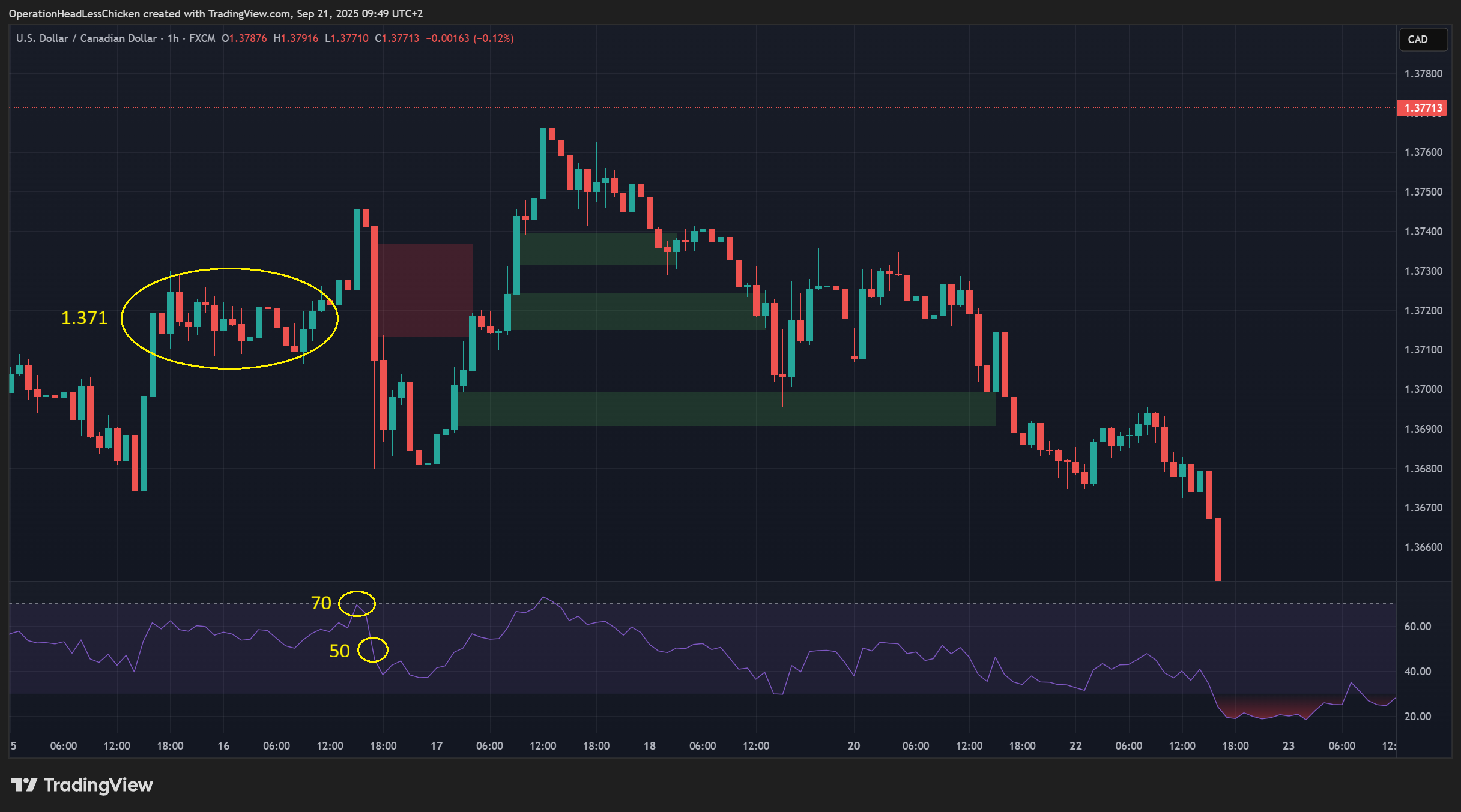
  <li><a href="https://www.tradingview.com/support/solutions/43000502040-volume-profile-indicators-basic-concepts" target="_blank" rel="nofollow noopener noreferrer">Volume Profile (VP)</a></li>
</ul>]]></content><author><name>Péter</name></author><category term="Trading" /><category term="Smart Money Concepts" /><category term="Smart Money Concepts" /><category term="Fair Value Gap" /><category term="Market Psychology" /><category term="Relative Strength Index" /><category term="Volume Profile" /><summary type="html"><![CDATA[In this part, I will discuss Fair Value Gaps (FVG), which is more of a trading psychology topic, but you will see how it relates to Smart Money Concepts in the following parts.]]></summary></entry></feed>